

Abdominal CT scan: When and What to Expect
December 22, 2025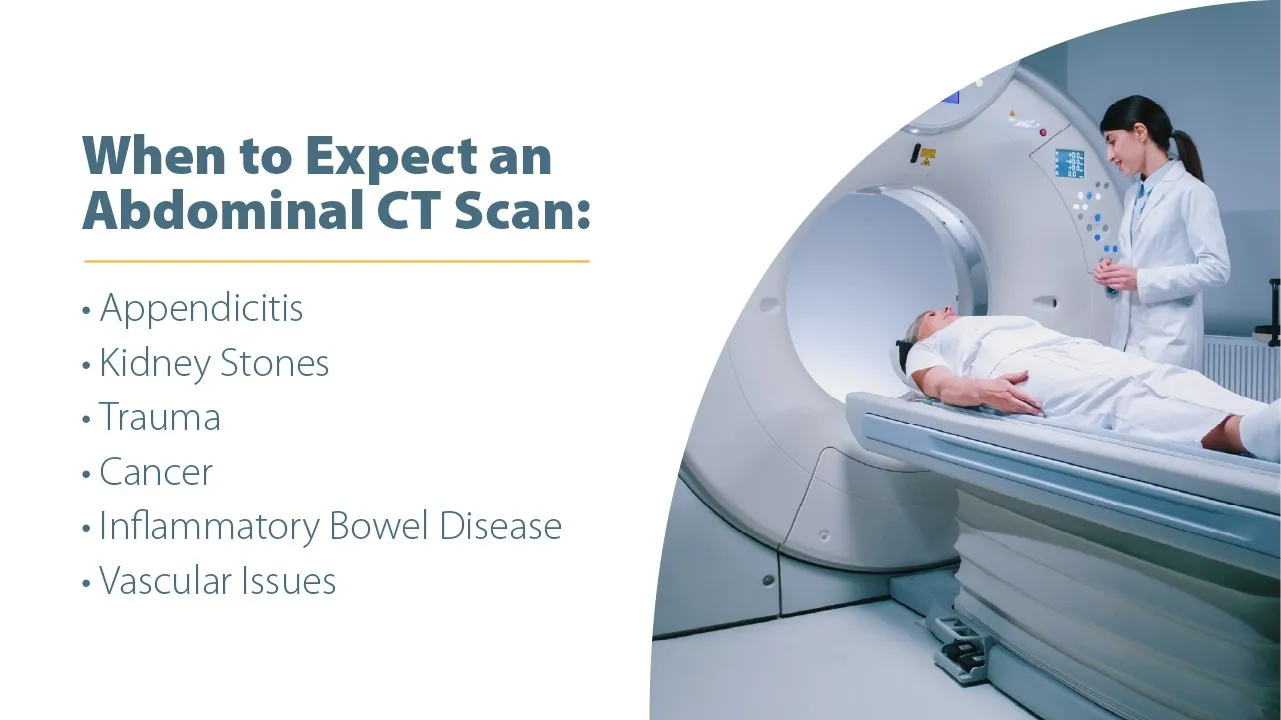
A sudden, sharp pain in your abdomen can be terrifying. It is one of the most common reasons people seek emergency care. Healthcare providers need fast, detailed images to understand the source of the pain. Is it appendicitis, a kidney stone, or something else? The difficulty with unresolved abdominal symptoms is often the delay in diagnosis and treatment. This progresses conditions like appendicitis, kidney stones, or internal bleeding.
This is where the abdominal CT scan procedure becomes essential. This advanced imaging technology captures numerous images from various angles. This blog explains precisely when you might need an abdominal pain diagnosis scan and what to expect from the process.
What is an Abdomen CT scan?
A CT scan of the abdomen helps doctors identify causes of pain, internal injury, infections, tumours, and blockages. It functions like a sophisticated X-ray, providing a clearer, layered view of internal structures. A contrast media (dye) is used in an abdomen CT scan to improve image clarity. It captures multiple images from different angles and merges them digitally within minutes.
When to Expect an Abdominal CT scan?
An abdominal CT scan is usually suggested by doctors when they need a better idea of what's causing signs like severe or ongoing abdominal pain. This scan helps them look at the internal organs, find any problems early, and figure out the best way to treat the patient. This scan is recommended to identify:
- Appendicitis: It confirms an inflamed appendix with high accuracy.
- Kidney Stones: It rapidly identifies the size and location of stones in the urinary tract.
- Trauma: After an accident, it checks for internal injuries, bleeding, or organ damage.
- Cancer: It detects tumours, determines their size, and checks for metastasis.
- Inflammatory Bowel Disease (IBD): It assesses inflammation, abscesses, or blockages in conditions like Crohn's disease.
- Vascular Issues: It identifies aneurysms or blockages in the abdominal blood vessels.
Surgeons also use abdominal CT scans to guide procedures. This includes guiding biopsies, draining abscesses, and planning minimally invasive tumor treatments. Moreover, they use the scans to plan and assess the results of surgery, like organ transplants.
How to Prepare for an Abdominal CT scan?
Preparing for a CT scan of the abdomen is usually straightforward. The most crucial decision your doctor makes is whether you need a whole abdomen CT scan with a contrast procedure. These are the preparation steps for an abdominal CT scan procedure:
- Specific instructions are given for specialised scans like CTA or virtual colonoscopy.
- If you are or might be pregnant, check with your doctor immediately to discuss alternative options.
- You may need to wear a gown. Remove all piercings, jewelry, and valuables beforehand; lockers will be provided.
- If you have kidney problems, inform the scheduler, as iodine-based contrast may not be safe.
- If you have a known allergy to contrast, inform staff when scheduling. Severe reactions mean IV contrast will not be administered.
- If your scan is without contrast, you can eat, drink, and take prescribed medications normally. If your scan is with contrast, do not eat anything three hours prior, but you can drink clear liquids and take medications.
- Eat a light meal three hours before the scan. Depending on your oral medication, you may need to discontinue use for 48 hours after the scan.
What Happens During the Abdominal Scan?
The CT scan may be done during a hospital stay or as an outpatient procedure. The entire scan process usually completes within 10–30 minutes. The procedure steps are:
Preparation and Contrast Access
You will lie on the scan table. If IV contrast is required, a technologist will start an intravenous (IV) line in your arm or hand. You may also be given contrast to drink or rectally.
Positioning
The table moves into the circular opening of the machine. Straps or pillows are used to help you stay perfectly still and comfortably positioned for clear imaging.
Scanning and Monitoring
The technologist controls the scanner from an adjacent room but maintains constant visual and audio contact. They watch you through a window and communicate via a speaker. You may have a call button.
Imaging
The scanner rotates, passing X-rays through your body. You will hear clicking or buzzing sounds. You must remain still and will be asked to hold your breath for short intervals to prevent motion blurring.
Contrast Sensation
If the IV contrast is injected, you may feel a brief flushing sensation, a temporary metallic taste, a slight headache, or nausea. This is a common and quick effect. You must immediately tell the scan technician if you feel breathing difficulties, severe sweating, or heart palpitations.
Completion
Once all images are captured, the table slides out, and the IV line is removed. The technician works quickly to minimise any discomfort from lying still.
What Happens After an Abdominal CT scan?
A CT scan of the abdomen provides your doctor with a layered view of the digestive organs, urinary tract, and nearby blood vessels. It allows the simultaneous identification of inflammation, tumours, stones, or internal bleeding. Steps for post-abdominal CT scan:
Post-Scan Monitoring
If you received contrast dye, you might be monitored briefly for any side effects. Watch for itching, swelling, rash, or difficulty breathing, which may indicate a reaction.
Aftercare at Home
You can generally return to your normal diet and routine immediately. Crucially, if the IV site becomes painful, red, or swollen after you get home, call your doctor promptly. Your physician will provide specific follow-up instructions based on your health.
Also Read: Abdominal Hernia Repair
Is It Risky to get an Abdominal CT scan?
Patients often worry about safety due to the use of X-rays. Here is a brief look at CT scan risks and safety measures:
Radiation Exposure
The only actual exposure risk is a small dose of radiation. Specialists carefully control this dose using modern "low-dose" protocols. The diagnostic benefit almost always outweighs this minimal risk.
Contrast Reactions
Allergic reactions to IV contrast are rare. Most are mild (itching, hives). Severe reactions (difficulty breathing) are extremely rare, and staff are prepared with medication to handle them instantly.
Pregnancy and Breastfeeding
Women must inform their doctor immediately if there is any chance, they are pregnant, as radiation exposure during pregnancy may lead to birth defects. CT scans are generally avoided unless medically essential. There is usually no need to stop breastfeeding after a CT scan.
Get Trusted Imaging Support for Your Abdominal Health!
The abdominal CT scan is a vital tool for quick, accurate internal diagnosis. It effectively manages symptoms and guides crucial treatment decisions. Knowing the procedure for abdominal CT scan, adhering to CT scan preparation guidelines, and understanding the low CT scan safety and risk factors ensures a smooth experience.
If you require a detailed abdominal pain diagnosis and expert CT scan report interpretation, choose a trusted provider. For timely and precise diagnostic imaging, consult the specialists at Apollo Spectra. We combine advanced imaging technology with expert radiologists to ensure accurate results and quick communication with your referring doctor.
Recent Blogs


Get Expert Health Advice
Related Blogs


NOTICE BOARD
CONTACT US
FOR PARTNERSHIP
CONTACT US
FOR PARTNERSHIP
.svg)
.svg)
.svg)
.svg)


 Book Appointment


Need Help?
Request a Callback
Have questions about your treatment or consultation? Our experts are here to help.