

Benefits of Probiotics
April 9, 2026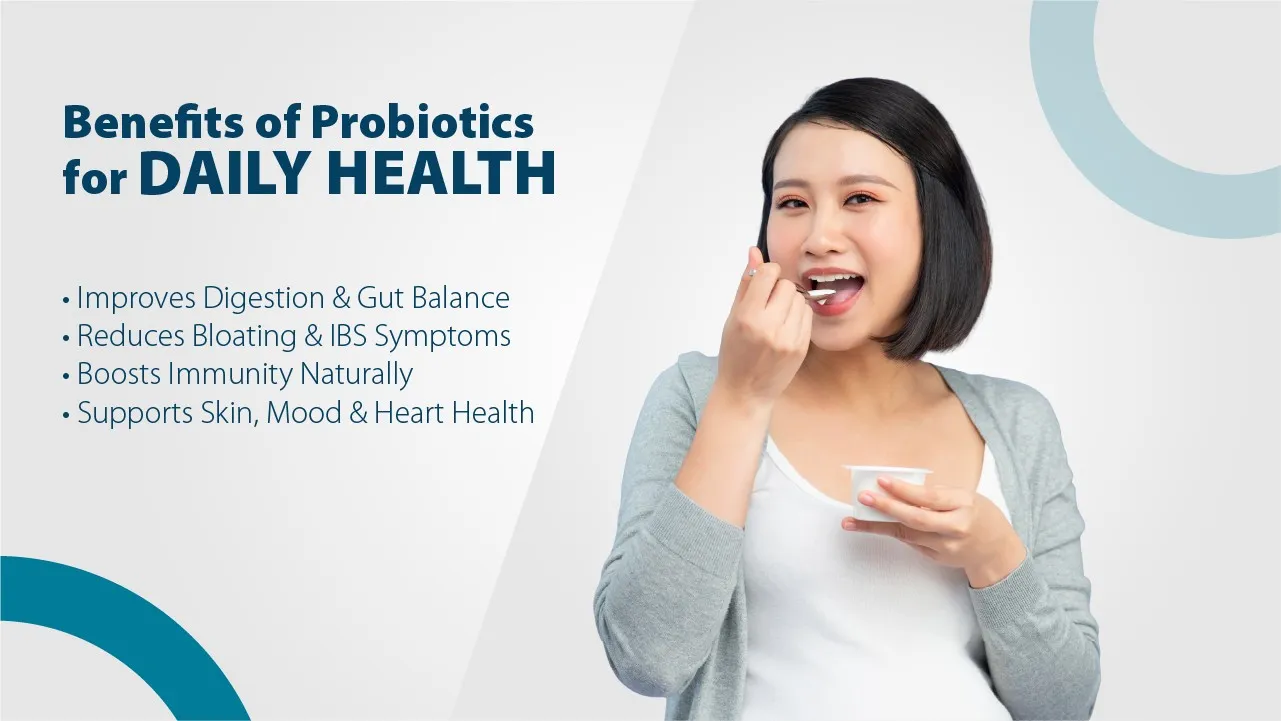
Your body functions as a complex ecosystem. It hosts trillions of microorganisms. These tiny residents dwell primarily in your digestive tract. Scientists refer to this community as the microbiome. Many people fear bacteria. However, not all microbes are harmful. Most of them are your benevolent allies. These beneficial bacteria are known as probiotics. They act as the peacekeepers of your digestive tract. Therefore, a balanced microbiome is crucial to staying healthy. If this balance is disrupted, you might experience conditions like Dysbiosis when bad bacteria take over. This is where probiotics for gut health become the ultimate solution. Continue reading to learn more about the benefits of probiotics and which diet you should include in your meals to maintain a good balance of probiotics.
What Are Probiotics?
Your gastrointestinal tract is home to a staggering 100 trillion microbial organisms, a community collectively referred to as the gut microbiome. Within this ecosystem, certain bacterial strains actively promote health, whereas others, when left unchecked, drive systemic inflammation and disease. Probiotics are the beneficial members of this community.
The World Health Organization offers the most widely accepted clinical definition: probiotics are live microorganisms that, when administered in adequate amounts, confer a health benefit on the host. That definition, while precise, only scratches the surface of what these organisms actually do.
What Makes an Organism a Probiotic?
Not every microbe qualifies. For an organism to be classified as a probiotic, it must meet a specific set of scientific criteria:
- Alive and metabolically active at the point of consumption.
- Survive gastric acid and bile salt exposure to reach the intestinal tract intact.
- Demonstrate a measurable, strain-specific health benefit in peer-reviewed clinical research.
- Safe for human consumption across all standard therapeutic doses.
Benefits of Probiotics for Digestion
The benefits of probiotics for digestion are the most well-documented in science. When your gut bacteria fall out of balance, digestion suffers. Bloating, irregular bowel movements, cramping after meals, and general gut discomfort are all common signs. Restoring that microbial balance through targeted probiotic therapy can produce real and lasting relief.
Probiotics for Bloating and IBS
Irritable Bowel Syndrome affects 10 to 15% of people worldwide, yet many who have it do not even know. It is a condition marked by abdominal pain, bloating, and unpredictable bowel habits. The evidence for probiotics for bloating and IBS is genuinely impressive.
The reason comes down to two specific strains. Lactobacillus acidophilus and Bifidobacterium infantis regulate how quickly food moves through the intestine, calm internal inflammation, and stop gas-producing bacteria from multiplying out of control.
Protecting Your Gut During Antibiotic Treatment
Antibiotics are necessary medicines, but they come with a significant downside. Beneficial gut bacteria get wiped out along with the harmful ones. The result is often diarrhea, discomfort, and a gut that takes weeks to recover. Taking probiotics alongside antibiotics reduces the risk of antibiotic-associated diarrhea.
Also Read:
How Probiotics Improve Gut Bacteria Balance
Understanding how probiotics improve gut bacteria is simpler than it sounds. Your gut is a competitive ecosystem. Probiotic bacteria intervene in very practical ways:
- Attachment sites on the gut wall get occupied by probiotic bacteria, leaving no room for harmful bacteria to settle
- Dietary fiber fermentation produces butyrate and propionate, substances that feed and protect the gut lining at the cellular level.
- Lactic acid production by Lactobacillus species lowers intestinal pH to a level where harmful bacteria cannot survive.
- Direct communication with gut-associated lymphoid tissue (GALT) helps calm unnecessary inflammation throughout the mucosal layer.
Probiotic protocols tailored to an individual's specific gut profile are far more effective at restoring microbial balance than standard generic supplements. This is an important point for anyone considering probiotic therapy as part of a treatment plan.
Also Read: Natural foods to improve Uterus Health
How Probiotics helps in Improving for Immunity?
Here is something that surprises a lot of people. Approximately 70% of the human immune system is located inside the gastrointestinal tract. Your gut wall is a defense barrier between the outside world and your bloodstream. Probiotics for immunity work by keeping that barrier strong and responsive:
- Secretory immunoglobulin A (sIgA) production gets stimulated by probiotics, intercepting harmful pathogens before they enter the bloodstream.
- Natural killer cell activity receives a boost from certain Lactobacillus strains, strengthening your frontline defense against viruses.
- Consistent probiotic colonisation reduces the chronic low-level inflammation that drives many autoimmune conditions.
- Upper respiratory infection frequency drops meaningfully with regular probiotic use, a benefit most pronounced in children and older adults.
Best Probiotic Foods for Health
You do not necessarily need a supplement to get your probiotics. The best probiotic foods for health have been part of traditional diets across cultures for centuries:
| Food Source | Active Probiotic Strains | Primary Therapeutic Use |
|---|---|---|
| Yogurt (live cultures) | L. bulgaricus, S. thermophilus | digestion and mucosal immunity |
| Kefir | Multiple Lactobacillus species | Gut microbial diversity, IBS relief |
| Kimchi | Leuconostoc mesenteroides, L. plantarum | Anti-inflammatory support |
| Sauerkraut | L. plantarum, L. brevis | Digestive motility, bloating |
| Miso | Aspergillus oryzae, Lactobacillus spp. | Gut integrity, immune tone |
| Kombucha | Acetic acid bacteria, Brettanomyces | Microbial diversity |
What Probiotics Do for Your Brain, Skin, and Heart
Most people think of probiotics as a digestion solution. The reality is that the gut microbiome has a direct line of communication to some of the most vital systems in your body. Here is what the science actually shows.
Your Gut Drives Your Mood
The gut produces approximately 90% of the body's serotonin. It also synthesizes substantial quantities of GABA and dopamine precursors, the neurotransmitters that regulate emotional stability, anxiety levels, and stress response. A disrupted microbiome reduces that production, and your mental state reflects it.
Skin Health Is a Gut Health Issue
When the gut lining develops microscopic gaps, bacterial metabolites leak into the bloodstream and trigger a systemic inflammatory response. That inflammation frequently surfaces on the skin. Atopic dermatitis, acne vulgaris, and rosacea are all consistently associated with elevated intestinal permeability. This is where consuming probiotics like Lactobacillus rhamnosus supplementation can reduce eczema severity by restoring the gut lining's structural integrity.
Cholesterol Management Starts in the Microbiome
Some types of probiotics directly affect how the liver breaks down and reuses cholesterol, which lowers the amount of LDL in the blood. Lactobacillus reuteri is the most well-known type that is good for your heart.
Who Can Benefit from Probiotics?
Probiotics support general digestive wellness, but certain individuals may benefit more from probiotics for gut health. These include people who:
- Experience frequent digestive discomfort
- Have recently completed antibiotic treatment
- Experience bloating or IBS symptoms
- Maintain irregular work schedules or high stress levels
- Experience constipation or inconsistent bowel patterns
- Want to support immune health through diet
Urban lifestyle habits such as fast food consumption and irregular eating schedules increase the need for probiotics among working populations.
Get the Right Guidance for Your Gut Health!
The science around probiotics for gut health is well-established and growing every year. The evidence keeps pointing to the same conclusion: keeping your gut bacteria healthy is good for your health as a whole, and probiotics are one of the easiest ways to do that.
If you don't know where to start, if you have IBS, persistent digestive problems, or constant gut pain, the gastroenterology team at Apollo Spectra can help you find the reason and make a gut health plan that works for your body.
Recent Blogs



Get Expert Health Advice
Related Blogs


NOTICE BOARD
CONTACT US
FOR PARTNERSHIP
CONTACT US
FOR PARTNERSHIP
.svg)
.svg)
.svg)
.svg)


 Book Appointment


Need Help?
Request a Callback
Have questions about your treatment or consultation? Our experts are here to help.