

Constipation and Its Impact on Anal Health
November 30, 2025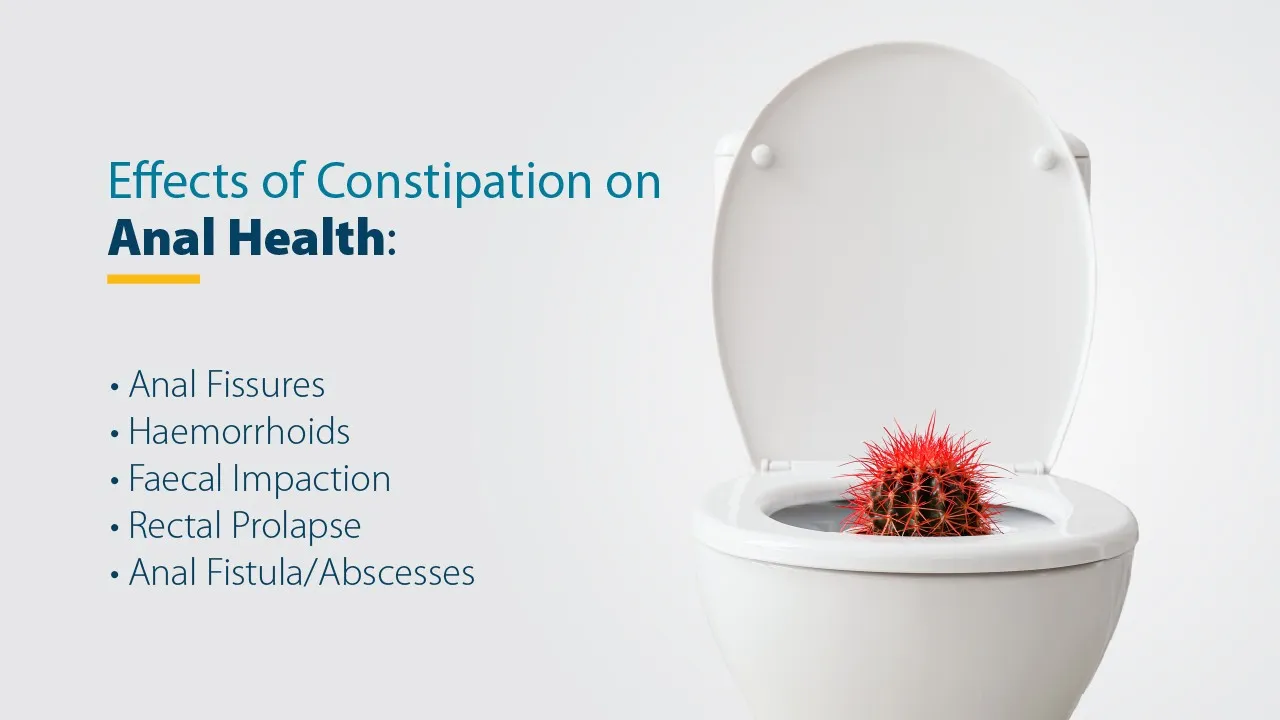
Constipation is one of the most commonly faced problems among the Indian population. It can be uncomfortable and, if ignored, may cause major anal health issues. The term constipation is used when someone faces difficulty in passing stool and bowel movements without any extra effort. Any change in the size of the stool (larger or smaller than usual) or the presence of lumps and hardness in the stools may also be indications of constipation.
Chronic constipation can also result in problems with anal health, including piles, anal fissures, etc. As per studies, nearly 20% of adults between 45- and 65-years old deal with chronic constipation. So, read on to examine different methods of chronic constipation treatment and how, if ignored, it can result in major health issues.
How Constipation Leads to Anal Issues?
Delayed bowel movements can increase the level of pressure in the rectum, which can result in hard stools that adhere to and stretch the sensitive tissue of the anus. This process may lead to issues such as anal fissures and fecal impaction (a large mass of stool gets stuck in the colon or rectum). These complications often result in considerable pain and may also cause anxiety about future bowel movements.
What Causes Constipation?
There are numerous causes of constipation that require immediate attention. Let us look at the various risks and causes:
- Not getting enough dietary fibre from sources such as fruits, vegetables, and cereals
- Changes in normal routine or lifestyle, including dietary modifications
- Ignoring the natural urge to have a bowel movement
- Medication side effects
- Not drinking enough fluids
- Psychological issues, such as anxiety or depression
In children, constipation may also be related to a poor diet, fear of using the bathroom, or problems with toilet training.
Also Read: Constipation diet plan
What Are the Effects of Constipation on Anal Health?
If left untreated, chronic constipation can lead to complications that may affect your pelvic floor and bowel health. Listed below are some of the complications of untreated constipation or chronic constipation:
Anal Fissures
Think about the pain of passing hard stools so often that you create a tear in the thin tissue surrounding your anus. This is known as an anal fissure due to constipation. Frequently, causes of anal fissures, such as long-lasting diarrhea or passage of large stools, may result in pain with a torn or split surrounding the anal opening.
Haemorrhoids
More commonly referred to as piles, hemorrhoids due to constipation are an increase in the swelling in the veins surrounding your rectum and anus. These painful outgrowths can occur due to constant straining and pressure associated with constipation.
Faecal Impaction
At times, the stool may become so tough and trapped in your intestines due to long-term constipation that it results in a blockage referred to as fecal impaction. This condition can be quite painful and may even cause vomiting, necessitating a prompt visit to your doctor.
Rectal Prolapse
Continuous straining caused by constipation can extend the pressure on the rectum to such an extent that the latter can actually protrude outside the body. This serious complication, known as rectal prolapse, is another potential outcome of untreated constipation.
Anal Fistula/Abscesses
An abscess is a cavity that eventually develops due to infection between the inner anal canal or rectum and the skin close to the anus. This occurs due to an infection that leads to the formation of an abscess, which is a pus-filled space, and creates a route to the skin's surface.
How to Prevent Constipation Naturally?
Constipation is a common digestive issue characterized by infrequent or challenging bowel movements. Although it can be uncomfortable, there are several effective methods to help manage and prevent constipation.
Below are several approaches that may help you get the answer to how to prevent constipation naturally:
Optimal Dietary Fibre Intake
Take a specific diet for healthy bowel movements. Dietary fibre is a key component that enhances digestive health. It helps increase the frequency of bowel movements, improves the consistency of stools, and makes them softer and easier to pass. There are mainly two types of fibre that you can get from various food sources. You get soluble fibre from oats, barley, beans, lentils, and fruits and vegetables. Insoluble fibres are found in wheat bran, vegetables, and whole grains.
Stay Hydrated
Regular dehydration can lead to constipation. Adequate hydration is important for overall health. One of the most significant ways to reduce the risk of dehydration is by consuming water and maintaining proper hydration. In case a person experiences constipation, he/she can take carbonated (sparkling) water to alleviate the situation. Such water can be good for rehydration, and therefore it can become a means of bowel stimulation leading to the increased bowel movements.
Regular Physical Activity
Studies have found an association between sedentary behavior and the increased prevalence of constipation, which is why clinicians often recommend exercise to facilitate more regular bowel movements. Exercise stimulates intestinal muscle tissue and promotes a healthy digestive process, which may help avoid constipation.
Eat Probiotic Foods Or Take Probiotic Supplements
Probiotics are live, good bacteria that naturally exist in the gut, such as Bifidobacteria and Lactobacillus. If you're experiencing chronic constipation, you've likely lost an adequate balance of gut bacteria. Foods containing probiotics or probiotic supplements are restorative to gut bacteria and will hopefully help you become more regular.
What are the Other Effective Treatments for Constipation?
If lifestyle changes, including dietary changes, adequate fluid intake, and physical activity, do not alleviate chronic constipation, it may be time to consider treatment.
Treatment options for constipation that affect anal health may include:
Prescription Medications
Over-the-counter medications exist to help manage constipation symptoms. Physicians sometimes prescribe laxatives, including lubiprostone and linaclotide, and plecanatide, to help patients have more frequent bowel movements through intestinal water absorption. The prokinetic agent prucalopride functions as a colon muscle stimulant to enhance bowel movement and motility. In cases of constipation induced by opioids, prescription medications, such as methylnaltrexone and naloxegol, can be prescribed to alleviate constipation.
Nonsurgical treatment
If constipation is becoming more frequent, doctors may recommend several other treatments. They are as follows:
- Enema: An enema involves putting liquid into the rectum to help remove stool. If this doesn't work, a disimpaction can be performed by a doctor.
- Disimpaction: It involves breaking up the blockage and pulling it out after giving an enema.
- Pelvic Floor Physical Therapy: When appropriate, pelvic floor physical therapy may be considered, and this can include biofeedback tools that can retrain pelvic muscles to further bowel function.
Surgical Treatment
In severe cases of constipation, surgery may be required to repair damage or structural problems in the gastrointestinal tract. There are two primary operations.
- Colectomy: The first is a colectomy, in which the surgeon removes all or part of the colon if it is severely damaged, and stool will collect in a bag outside of the body.
- Sacral Nerve Modulation: The second is sacral nerve modulation (SNM), in which a device is implanted at the base of the spine to stimulate adjacent nerves and cause the person to have bowel movements more often.
Biofeedback Therapy
This is especially helpful for patients with pelvic floor dysfunction. Biofeedback therapy helps retrain your muscles for better bowel control and coordination. It is non-invasive, yet can be of significant assistance if you are dealing with anal constipation or an anal fissure from constipation.
Get Treatment for Chronic Constipation with Exceptional Care!
Constipation can be uncomfortable and has a number of possible underlying causes. However, many natural and home treatments can be useful. If you continuously experience constipation, you may want to speak with your doctor for further evaluation to identify the cause and find an effective chronic constipation treatment. To avoid an anal fissure, you can see a health care professional at Apollo Spectra, which offers constipation therapy.
Make an appointment with us to receive a professional diagnosis if you experience difficulty moving your bowels or other unexplained digestive issues!
Recent Blogs


Get Expert Health Advice
Related Blogs

NOTICE BOARD
CONTACT US
FOR PARTNERSHIP
CONTACT US
FOR PARTNERSHIP
.svg)
.svg)
.svg)
.svg)


 Book Appointment


Need Help?
Request a Callback
Have questions about your treatment or consultation? Our experts are here to help.