

Diet Chart for Kidney Stones
June 20, 2026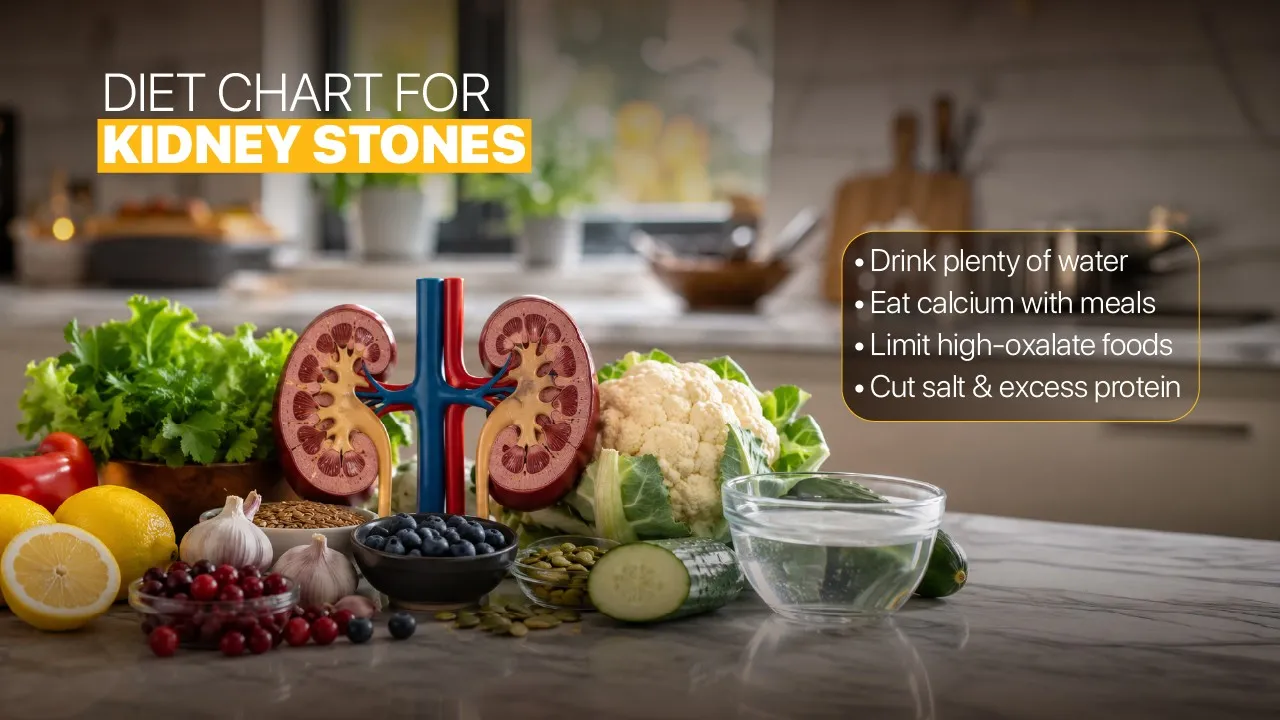
The most common piece of advice people get after their first kidney stone: cut out calcium foods. It feels logical; the stone had calcium in it, so calcium must be the problem. But that conclusion is wrong, and following it can make things worse.
Dietary calcium does not cause kidney stones. It actually helps prevent them. The real drivers are more nuanced, more specific to the Indian diet, and far more manageable than most people realise. Read on for a practical kidney stone diet built on what current evidence actually says.
Why Does Food Affect Your Kidney Health With Stone?
About 80% of kidney stones in India are calcium oxalate stones. These are hard mineral deposits that form when calcium and oxalate (a naturally occurring compound found in many foods) meet in concentrated urine and crystallise. Diet influences two things that control this process:
- How much oxalate your kidneys have to handle, and
- How diluted is your urine at any given time.
When urine is concentrated, crystals form more easily. When oxalate intake is high, there is more raw material for those crystals. But eating enough calcium with your meals means that calcium binds to oxalate in the gut and removes it through stool, before it ever reaches the kidneys. Less oxalate in the bloodstream means less in the urine and a lower stone risk overall.
Diet is a genuine lever here. The right habits make recurrence considerably less likely.
What Should You Drink If You Have Kidney Stones?
Diluted urine is the single most effective way to reduce stone formation, and no dietary change compensates for not drinking enough. Here is what the research consistently points to:
- Drink 2.5 to 3 litres (6 - 8 glasses) of water per day. The practical check is simple: urine should be pale and clear by midday.
- Add lemon or lime juice to at least one glass of water daily. Citric acid raises urinary citrate (a natural compound that stops crystals from sticking together and growing).
- Limit tea and coffee to one or two cups per day. Both contain moderate oxalate levels.
- Avoid packaged cold drinks and fruit juices. Fructose raises uric acid in the blood and has a direct, well-documented link to stone formation.
Kidney Stone Diet: Foods High in Oxalate to Limit
The goal of a low-oxalate diet plan for kidney stones is not to eliminate oxalate entirely. It appears in too many foods to make that practical or sustainable. The focus is on reducing the highest-risk foods to a sensible frequency, particularly the ones that appear regularly in everyday Indian cooking.
| Food | Oxalate Level | Practical Guidance |
|---|---|---|
| Spinach (Palak) | Very High | Once a week at most |
| Beetroot | Very High | twice a week at most. |
| Peanuts | High | Not a safe daily snack for stone patients. |
| Almonds and Cashews | High | Small portions only, not a full handful. |
| Sweet Potato | Moderate to High | Small portions on occasion. |
| Wheat Bran | High | Better avoided on a stone prevention diet. |
| Tomatoes | Moderate | One small tomato per day is acceptable. |
| Most Dal and Legumes | Low to Moderate | Safe in typical Indian portions. |
| Rice and Roti | Low | Safe as everyday staples. |
| Cucumber, Lauki, and Tinda | Very Low | Excellent vegetables for daily use. |
Note: Boil high-oxalate vegetables like spinach and discard the cooking water before eating. This simple habit reduces their oxalate content considerably.
Also Read: Home Remedies for Kidney Stones
What Should You Eat More of With Kidney Stones?
Most people focus entirely on restriction and miss this half of the picture entirely. Several foods actively work against stone formation, and building meals around them makes a measurable difference over time.
Eat Calcium With Meals
The target is 1,000 to 1,200 mg of dietary calcium per day for most adults. Eating calcium with meals ensures it meets oxalate in the gut and removes it before absorption, rather than leaving oxalate free to pass into the bloodstream. Good daily sources in Indian cooking include:
- Low-fat milk and curd eaten with meals, not separately.
- Ragi (finger millet), one of the richest natural calcium sources in the Indian diet.
- Small portions of paneer.
Note: Take calcium supplements only on your doctor's guidance. Food calcium protects the kidneys. Supplement calcium taken at the wrong time or without food may actually raise stone risk.
Add Citrus Daily
Fresh citrus raises urinary citrate, which acts as a natural brake on crystal growth. The simplest approach is to squeeze lemon or lime into water each morning. Oranges, mosambi, and amla are equally useful and easy to include in daily fruit intake.
Shift Toward Plant Protein
Excess animal protein raises uric acid levels and reduces urinary citrate. Both of these changes increase the stone risk further. A manageable shift is replacing one meat-based meal per day with dal, and limiting red meat, organ meats, and shellfish to small portions twice a week. Moong, masoor, chana, and toor dal are all low to moderate in oxalate and rich in plant protein, which makes them a natural fit in a stone-conscious eating plan.
Diet Chart: What to Eat and Drink to Prevent Kidney Stones
A practical Indian diet chart for kidney stone patients needs to work within how most Indians already cook at home. Here is a one-day framework as a starting point:
| Meal | Good Choices | Worth Avoiding |
|---|---|---|
| Early Morning | Warm lemon water, 2 glasses | Sweet chai, packaged juice |
| Breakfast | Ragi porridge or oats with low-fat milk | Palak paratha, peanut chutney |
| Mid-Morning | Orange or mosambi, cucumber | Beet juice, tomato juice |
| Lunch | Roti, moong dal, low-oxalate sabzi, curd | Palak dal, excess rajma |
| Evening Snack | Roasted makhana or a small banana | Peanuts, namkeen, large portions of nuts |
| Dinner | Rice or roti, masoor dal, lauki or tinda sabzi | Spinach, sweet potato, wheat bran roti |
| Before Bed | Plain water or diluted lemon water | Large glass of whole milk |
What Are the Foods to Avoid With Kidney Stones?
Beyond oxalate, a few broader dietary patterns raise stone risk across all kidney stone types. These apply regardless of which type of stone you have had. So here’s the list of foods to avoid with kidney stones:
- Packaged and processed foods carry very high sodium levels. Sodium increases the amount of calcium excreted in urine, which directly contributes to stone formation.
- Excess animal protein, particularly red meat, organ meats, and shellfish, raises uric acid and depletes urinary citrate simultaneously.
- High-dose vitamin C supplements above 1,000 mg per day convert to oxalate inside the body. Food sources of vitamin C are safe. High-dose supplements are not.
- Pickles, papads, and instant noodles combine high sodium with processed fats in a single serving, making them worth cutting out entirely during kidney stone recovery.
Build Your Stone Prevention Plan Today!
The right diet for kidney stones depends on the type of stone you have. Calcium oxalate, uric acid, and cystine stones each have different dietary triggers, and what protects against one may be irrelevant for another. A urologist can assess your stone composition and create a plan specific to your kidney chemistry, removing the guesswork entirely. Book a consultation at Apollo Spectra to get a personalised meal plan for kidney stone recovery based on your actual test results.
Recent Blogs

Get Expert Health Advice
Related Blogs


NOTICE BOARD
CONTACT US
FOR PARTNERSHIP
CONTACT US
FOR PARTNERSHIP
.svg)
.svg)
.svg)
.svg)


 Book Appointment


Need Help?
Request a Callback
Have questions about your treatment or consultation? Our experts are here to help.