

Early Signs and Symptoms of Glaucoma
March 4, 2026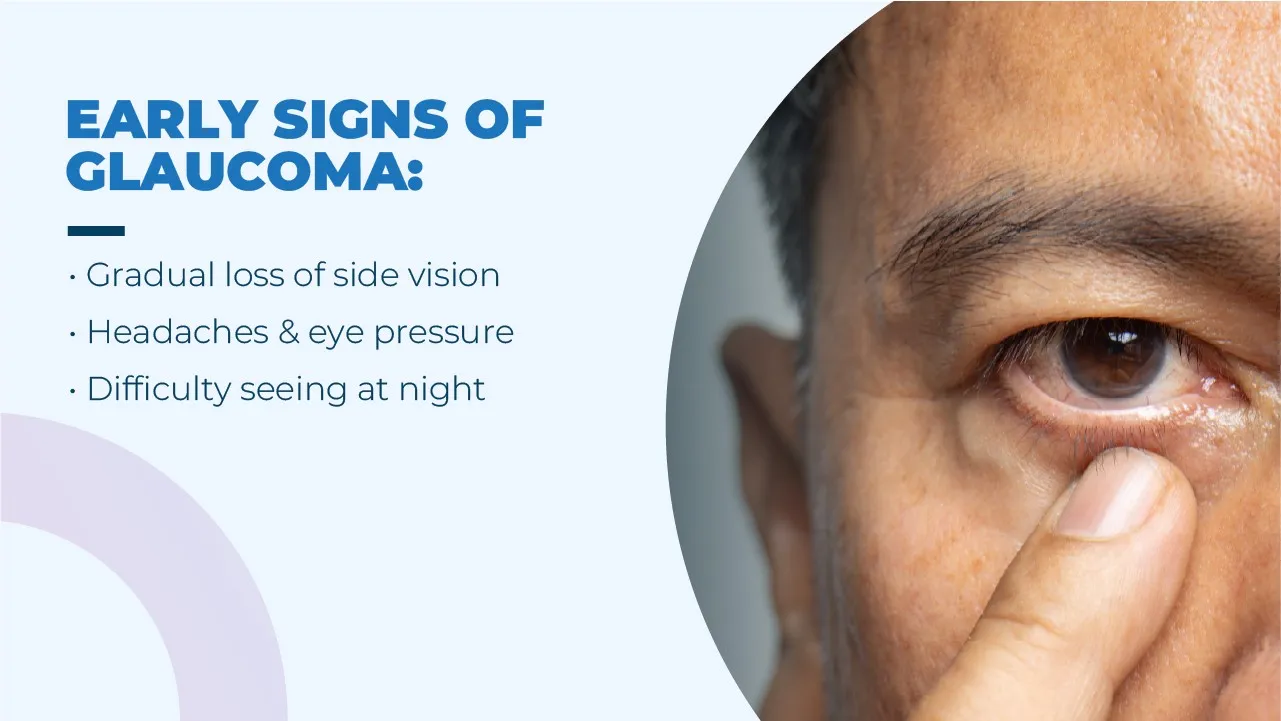
Glaucoma is often called the silent thief of sight for a reason. It can gradually damage the optic nerve and weaken vision without showing clear signs in the early stages. Most adults assume they would notice something serious happening with their eyes, but that belief results in missed signs. Symptoms can be so minor that they may feel like tired eyes or simply a sign of ageing.
Vision changes blend into daily habits and feel easy to ignore. By the time the problem feels real, valuable time may already be lost, and the damage may be permanent. This blog explores how early glaucoma symptoms in adults often look, how to detect them early, and the initial warning signs.
What Is Glaucoma?
Glaucoma is an eye disease that damages the optic nerve and makes vision worse over time. The optic nerve sends visual information from the eye to the brain. Therefore, any damage to it causes vision to weaken gradually. The process usually happens slowly and often goes unnoticed for a long time. Damage worsens over time, causing small areas of vision to fade. Without treatment, the vision loss can become severe and may eventually lead to blindness.
Glaucoma is a major cause of permanent blindness across the world. Millions of people live with vision loss caused by this condition, many without realizing it until later stages. In India alone, glaucoma has caused visual impairment or vision loss in more than 11 million people. This number continues to rise as the population ages. The disease does not reverse once damage occurs, which makes awareness and understanding critical.
What are the Initial Signs of Glaucoma in the Eyes?
The earliest signs of glaucoma rarely feel serious at first. Many people assume tired eyes, screen strain, or poor sleep are to blame. These small hints are almost never seen as warning signs of glaucoma eye disease. That is what makes the condition so easy to miss. If you pay attention earlier, you may be able to avoid losing more sight later.
Here are some early glaucoma symptoms in adults that most people don't notice:
- Loss of Peripheral Vision Over Time
Side vision is often affected first. Small, dark, or blurry areas can appear near the edges of what a person sees. The brain fills in these gaps, which makes the change difficult to detect. People only realise something is wrong when vision loss moves closer to the centre.
- Poor Night Vision
Low-light situations may start to feel uncomfortable. Driving at night becomes harder. Dim rooms seem darker than before. Details fade faster once the lights drop. These changes often develop slowly and are easy to blame on ageing or tired eyes, which delays concern and proper attention.
- Halos Around Lights
Lights may appear to have rings or glare around them. Streetlights and headlights feel harsher. This effect can come and go, which makes it feel unimportant. Many people assume the issue is dry eyes or glasses needing an update, not realising it can signal pressure changes inside the eye.
- Eye Discomfort
Mild discomfort may appear without clear pain. A dull ache near the eyes or heaviness around the brows can follow reading or long screen use. Irritation might also occur frequently. These sensations rarely feel serious enough to raise alarm, yet they can reflect stress inside the eye.
In some cases, glaucoma symptoms and causes can become sudden and severe. Acute angle closure glaucoma can cause intense eye pain, strong headaches, nausea, vomiting, redness in the eyes, and sudden blurred vision. These signs call for immediate help from an eye doctor or a hospital, as delaying care can quickly worsen the condition.
How To Detect Glaucoma Early?
Early detection depends on regular and detailed eye checkups, especially since glaucoma symptoms before vision loss are often absent. Here are the common tests your ophthalmologist might suggest to detect glaucoma early:
- Visual Acuity Test
The test involves reading letters placed at a distance. It gives a simple picture of how clear straight-ahead vision is during the exam. The visual acuity test does not point to any specific eye condition on its own, but gives information about your overall vision.
- Tonometry
Tonometry measures pressure inside the eye. A doctor usually uses a soft puff of air or a sensitive probe with numbing drops to ensure the process remains entirely comfortable for you. High pressure can signal risk related to Glaucoma and needs further evaluation.
- Ophthalmoscopy
The eye doctor checks the optic nerve closely using a bright light and a magnifying tool. Subtle changes in its appearance can point to early damage, even when eyesight seems unchanged.
- Visual Field Test
During this test, small lights appear across different areas of sight. The person responds as they notice them. Missed signals reveal gaps in side vision that are easy to overlook during daily activities.
- Pachymetry
Pachymetry measures corneal thickness, which changes how eye pressure appears during testing, so doctors consider it when reviewing glaucoma results.
- Optical Coherence Tomography
OCT checks how far a person can see in all directions. It helps reveal missing areas in side vision that often go unnoticed. Side vision can fade without affecting what is seen directly in front for a long time.
- Goinoscopy
Gonioscopy involves using a specialised mirrored lens to examine the "drainage angle" where your iris and cornea meet. This test allows your doctor to determine if the fluid in your eye is flowing out freely or if a narrow angle is causing a buildup of pressure.
Also Read: Precautions after cataract surgery
Who Is at Risk & Needs Frequent Checkups?
Some people face a higher chance of developing glaucoma and should not wait for warning signs of glaucoma eye disease to appear. Regular eye exams become even more important when early glaucoma symptoms in adults are more likely to go unnoticed or develop faster.
People who need more frequent checkups include:
- Individuals aged over 60
- Adults with a family history of glaucoma
- Anyone with a past eye injury or eye surgery
- Those with severe near-sightedness or far-sightedness
- Diabetic patients
- African-American individuals
- Hispanic individuals
Staying alert and scheduling regular eye visits can help reduce the risk of silent vision loss, and detecting early glaucoma symptoms in adults helps treat it faster.
Protect Your Vision with The Right Treatment at Apollo Spectra!
Glaucoma is an eye condition that slowly deteriorates vision by damaging the optic nerve. The condition often develops without clear warnings, which makes awareness especially important. Therefore, you should learn how to protect your vision during the early stages to reduce serious outcomes later. If you experience any of the related warning signs, reach out to the experienced ophthalmologists at Apollo Spectra. They will assess optic nerve health and identify early glaucoma symptoms in adult patients before vision loss becomes noticeable.
Recent Blogs



Get Expert Health Advice
Related Blogs


NOTICE BOARD
CONTACT US
FOR PARTNERSHIP
CONTACT US
FOR PARTNERSHIP
.svg)
.svg)
.svg)
.svg)


 Book Appointment


Need Help?
Request a Callback
Have questions about your treatment or consultation? Our experts are here to help.