

Foods To Avoid for Male Fertility
July 2, 2026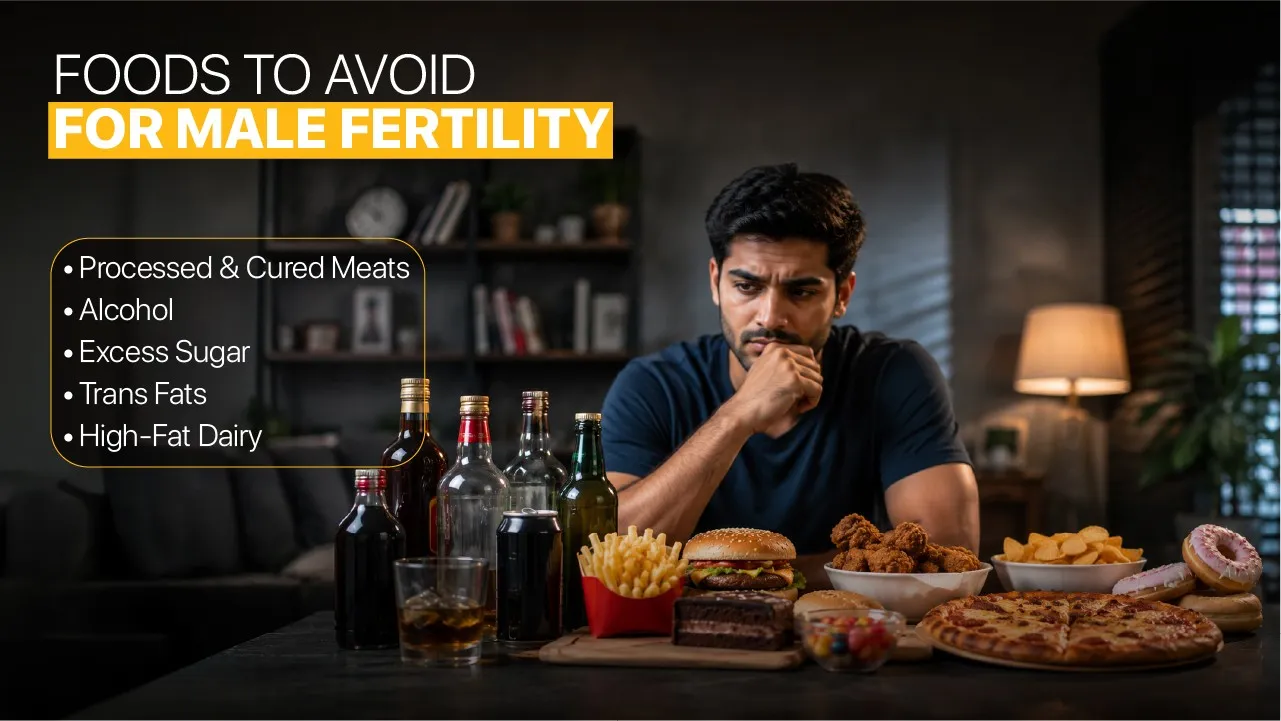
Whenever a couple tries to conceive, every conversation mostly circles back to the woman, her cycle, her hormones, and what she should and should not eat. The man's diet almost never comes up, whereas in reality, male infertility contributes to nearly half of all infertility cases among couples.
Sperm are produced over a continuous 72-day cycle, and what a man eats throughout that window also affects how many sperm are produced, how well they move, and whether their structure is healthy enough to fertilise an egg. So now, if you are also looking for the foods you should eat and avoid for improved male fertility, read on to get everything you need.
Why Is The Right Choice of Food Important for Sperm Health?
Sperm health and nutrition are connected through biology that most people do not think about until there is a problem.
Sperm production depends on a hormonal environment. The testes need adequate testosterone to drive spermatogenesis (the process through which sperm cells are produced and matured). Zinc and folate are equally important for sperm DNA integrity. And the antioxidants in your body help sperm survive oxidative stress without DNA damage. Now, here is how poor nutrition disrupts all three:
- Processed/fast foods generate free radicals that damage sperm DNA and reduce the progressive motility of the sperm.
- Certain food compounds (phytoestrogens) mimic oestrogen in the body, which can suppress testosterone production.
- A diet high in refined carbohydrates and industrial fats also triggers systemic inflammation that affects testicular function over time.
As the sperm regenerate every 72 days, whatever changes you begin in your diet will become visible in semen quality within two to three months.
Which Foods Decrease Sperm Count?
Foods that decrease sperm count tend to share one common mechanism: they either generate oxidative stress or disrupt testosterone signalling. Here is what the latest research says:
Ultra-Processed Foods
A study published in Cell Metabolism in 2025 found that an ultra-processed diet decreased FSH (follicle-stimulating hormone, the hormone that directly drives sperm production) and reduced total sperm motility. The effect was very much visible even at normal calorie intake, not just when excess calories were involved.
In the average urban Indian diet, ultra-processed foods appear as packaged namkeen, instant noodles, biscuits, ready-to-eat meals, and flavoured chips. For many men, these are not occasional indulgences. They are a part of their daily life.
Trans Fats
Trans fats (artificially hardened fats found in most fried fast food, packaged bakery products, and margarine) are particularly damaging to sperm quality. And high trans fat intake reduces sperm concentration and lowers testosterone levels. The mechanism involves cytokine release (inflammatory proteins in the blood) that interferes directly with testicular function.
High-Fat Dairy
Full-fat dairy products like whole milk and cheese contain trace amounts of oestrogen. This comes from the milk of pregnant cows, where oestrogen levels are naturally elevated. The fat in dairy concentrates these hormones further. The Rochester Young Men's Study found that men with the highest full-fat dairy intake had lower sperm motility and poorer sperm morphology compared to men who consumed little or none. Low-fat dairy did not show the same effect.
Also Read: Tips for improving Fertility
Which Foods Lower Testosterone Naturally?
Testosterone is the primary hormonal driver of sperm production. When levels fall, the process of spermatogenesis also slows down. The foods that lower testosterone naturally are as follows:
Processed and Cured Meats
Packaged cold cuts, frozen chicken nuggets, and ready-to-cook meat products all fall into this category. These go through heavy industrial processing before they reach your plate. That process strips out most of the nutritional value and loads the product with saturated fat and preservative compounds. Both interfere with how the body produces testosterone.
Alcohol
Beer, whiskey, and wine suppress testosterone. Regular intake of even one or two drinks a day shifts the hormonal balance toward oestrogen in men. That shift slows down sperm development directly. The occasional drink at a social event is a different conversation. The problem is the men who have a drink every evening without thinking of it as a pattern. That daily habit is what adds up.
Excess Sugar
High sugar intake raises insulin levels, which suppresses SHBG (sex hormone-binding globulin, a protein that regulates free testosterone in the bloodstream). Lower SHBG disrupts the hormonal precision that spermatogenesis requires to run efficiently.
How Does Diet Shape Sperm Motility?
Diet to improve sperm motility works on a simple principle: the foods that help sperm move efficiently are rich in antioxidants and omega-3 fatty acids. The foods that impair motility create oxidative damage to sperm membranes, reducing their capacity to reach an egg. The contrast with ultra-processed food intake was significant across all metrics.
| Dietary Pattern | Effect on Sperm Motility | Effect on Sperm Count |
|---|---|---|
| Ultra-Processed Diet | Significantly reduced | Trending downward |
| Western Diet (high in fried foods and processed meats) | Impaired | Up to 42 million lower |
| Mediterranean Diet (whole foods and fish-forward) | Improved across multiple studies | Positively associated |
| High Trans Fat Diet | Reduced sperm membrane function | Lower concentration |
What Should a Male Fertility Diet Plan Actually Include?
A practical male fertility diet plan does not require an expensive overhaul. The focus is on replacing the foods above with options that support testosterone production, lower oxidative stress, and supply the micronutrients sperm development depends on.
How to increase sperm count through food starts with daily, consistent choices:
- Replace packaged snacks with walnuts or sunflower seeds, both of which are rich in selenium and zinc, two minerals directly involved in sperm production.
- Add fatty fish like mackerel or sardines at least twice a week for omega-3 fatty acids that protect sperm membrane integrity.
- Choose whole grain options over maida-based bread and biscuits to reduce the insulin spike that suppresses testosterone.
- Include dark leafy vegetables at one meal each day for folate, which supports sperm DNA health.
- Switch to low-fat dairy if dairy is a daily staple.
- Keep alcohol below two drinks per week during any active conception period.
Get Personalised Advice From Experts at Apollo Spectra!
The latest research makes one thing clear: what a man eats over the next 72 days directly influences the sperm produced at the end of that cycle. And diet is one of the most controllable variables in male fertility. If you and your partner have been trying to conceive without success, book a consultation at Apollo Spectra for a comprehensive semen analysis and a personalised plan built around your hormonal and nutritional profile.
Recent Blogs
Get Expert Health Advice
Related Blogs

NOTICE BOARD
CONTACT US
FOR PARTNERSHIP
CONTACT US
FOR PARTNERSHIP
.svg)
.svg)
.svg)
.svg)


 Book Appointment


Need Help?
Request a Callback
Have questions about your treatment or consultation? Our experts are here to help.