

Laparoscopic vs Open Surgery: Which is Better for GI Conditions?
April 18, 2026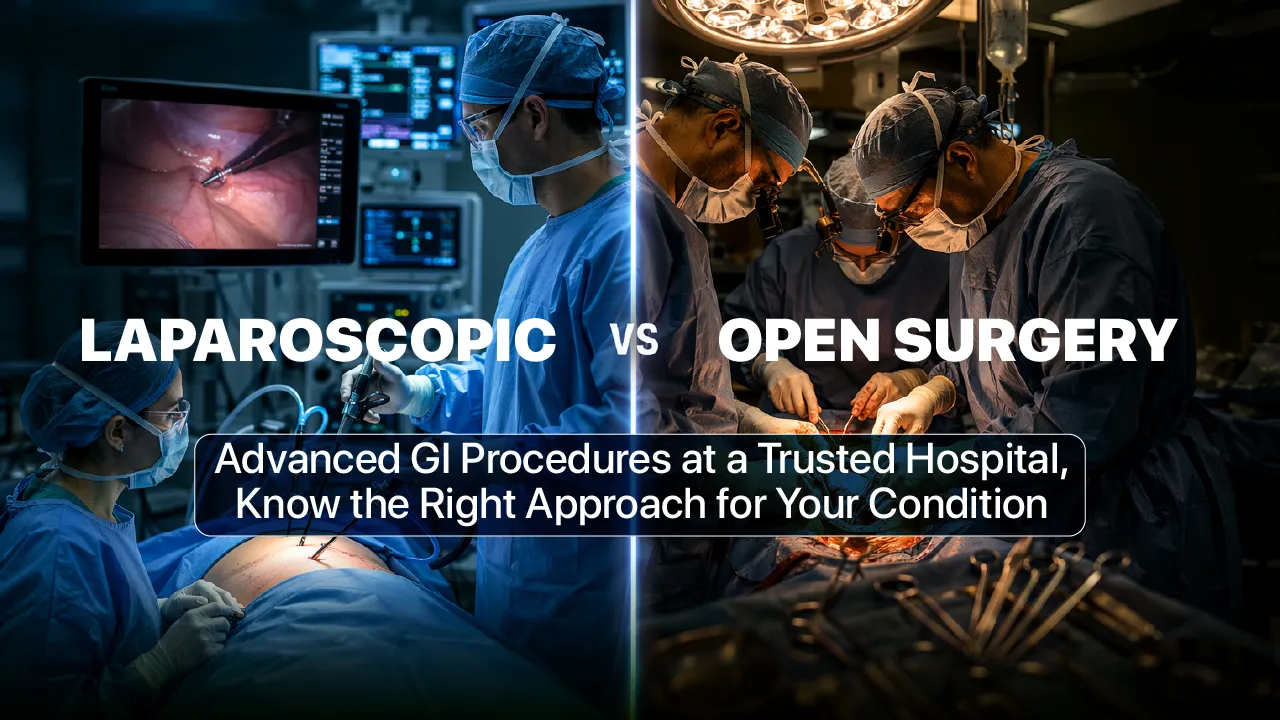
The difference between laparoscopic vs open surgery is not just about the size of the cut. It is about how the body heals, how long recovery takes, and what the experience looks and feels like in the weeks after the procedure. Both approaches have their place. Neither one is universally better than the other. What matters is which one is right for the specific condition, the specific patient, and the specific surgical situation at hand. This guide explains both approaches clearly so you can have a more informed conversation with your doctor.
What Actually Happens in Each Type of Surgery?
Surgery for a gastrointestinal (GI) condition becomes necessary when the problem has crossed a point that medication, endoscopy, or dietary changes can no longer manage. This is where understanding the mechanics of each approach makes the rest of the comparison much easier to follow.
How Laparoscopic Surgery Works
Laparoscopic surgery uses small incisions, usually between 0.5 and 1.5 centimetres each. A thin tube with a camera, called a laparoscope, is inserted through one of these incisions. The surgeon observes a live feed on a monitor and works with long, thin tools that are passed through the other small incisions. Carbon dioxide gas is introduced to the abdomen to provide space in which the surgeon can see and operate.
The operation is performed without opening the abdomen in the conventional sense. The organs are accessed internally, through a controlled and carefully restricted access.
How Open Surgery Works
Open surgery is a single, larger incision on the abdomen, usually between 15 and 30 centimetres, depending on the procedure and the anatomy. The surgeon operates directly on the organ or tissue with complete and unhindered visual access and both hands in the operating room.
This approach has been the standard for abdominal and gastrointestinal surgery for well over a century. It remains the preferred choice in many situations today.
What Are the Key Differences Between the Two Approaches?
Here is a direct comparison across the factors that matter most to patients.
| Factor | Laparoscopic Surgery | Open Surgery |
|---|---|---|
| Incision Size | Several small cuts, 0.5 to 1.5 cm each | One large cut, 15 to 30 cm |
| Hospital Stay | 1 to 3 days typically | 5 to 7 days or longer |
| Recovery Time | 2 to 4 weeks | 6 to 8 weeks |
| Post-Surgery Pain | Less, manageable with oral medication | More, often requires stronger pain control |
| Infection Risk | Lower | Relatively higher |
| Blood Loss | Less | More |
| Scarring | Minimal | Significant |
| Surgeon Visibility | Camera-assisted, monitor view | Direct, unobstructed |
| Suitable for Complex Cases | Not always | Yes, especially for large tumours or emergency situations |
| Cost | Slightly higher upfront | Lower upfront, but longer recovery adds indirect costs |
What Are the Benefits of Laparoscopic Surgery for GI Conditions?
Laparoscopic surgery benefits go beyond cosmetics. There are measurable clinical reasons why it has become the preferred approach for a wide range of gastrointestinal procedures.
Less Trauma to the Body
Smaller incisions mean less disruption to the abdominal wall muscles and surrounding tissue. The body has significantly less to repair after surgery. This directly affects how quickly a patient feels like themselves again.
Faster Return to Normal Life
Laparoscopic surgery recovery time vs open surgery shows a consistent pattern across studies. Most laparoscopic patients resume light activity within two weeks. Open surgery patients typically need six to eight weeks before they can do the same. For someone with work and family responsibilities, that gap is not a small thing.
Lower Risk of Complications
- Wound infections are less frequent because the exposure is smaller
- Hernia at the incision site, a known risk with large open cuts, is far less common
- Blood clots are less likely because patients are mobile sooner
- Post surgery adhesions, the internal scar tissue that can cause bowel problems later, tend to be less severe
Less Pain, Less Medication Dependence
Patients who have laparoscopic procedures generally report lower pain scores in the days following surgery. That means less reliance on strong pain medication, which in turn means fewer side effects and a clearer head during recovery.
When Is Open Surgery Still the Better Option?
Open surgery vs minimally invasive surgery is not a competition where one side always wins. There are clinical situations where open surgery is the more appropriate and safer choice.
- Large or complex tumours that require extensive tissue removal
- Emergency situations such as bowel perforation, severe internal bleeding, or peritonitis
- Cases where previous abdominal surgeries have caused significant internal scarring
- Situations where the anatomy is unusual or visibility through a laparoscope would be inadequate
- Conditions requiring removal of large sections of bowel
- Any case where complications arise during a laparoscopic procedure and conversion to open surgery becomes necessary
The decision to use open surgery is not a step backward. It is a clinical judgement made in the patient's best interest.
Which GI Conditions Are Commonly Treated Laparoscopically?
Minimally invasive GI surgery advantages are well established for a number of specific procedures.
- Cholecystectomy, the removal of the gallbladder
- Appendectomy for appendicitis
- Hernia repair, including inguinal and hiatal hernias
- Anti reflux surgery for GERD
- Colorectal resection for polyps or early stage colorectal cancer
- Splenectomy in selected cases
- Bariatric procedures such as sleeve gastrectomy and gastric bypass
Most of these were once done exclusively through open surgery. Laparoscopic techniques have made them considerably less disruptive for patients without reducing their effectiveness.
How Does a Surgeon Decide Which Approach to Use?
The decision is never made on patient preference alone. Several clinical factors guide it.
- The nature and location of the condition
- The patient's overall health, weight, and fitness for surgery
- Prior abdominal surgeries that may complicate laparoscopic access
- The urgency of the procedure
- The complexity of what needs to be done once inside
A surgeon who is experienced in both approaches will make this decision based on what is genuinely safest and most effective for that patient. The conversation should feel like an explanation, not a sales pitch for one technique over another.
Not Sure Which Surgery Suits You? Ask Apollo Spectra!
There is no single right answer in the laparoscopic vs open surgery conversation. What there is is a right answer for your specific condition, your health history, and your recovery needs. At Apollo Spectra, the surgical team is experienced in both laparoscopic and open gastrointestinal procedures and will walk you through exactly which approach suits your case and why. Book a consultation today and get a clear opinion from a surgeon who knows both options well.
Recent Blogs



Get Expert Health Advice
Related Blogs

NOTICE BOARD
CONTACT US
FOR PARTNERSHIP
CONTACT US
FOR PARTNERSHIP
.svg)
.svg)
.svg)
.svg)


 Book Appointment


Need Help?
Request a Callback
Have questions about your treatment or consultation? Our experts are here to help.