

Malaria vs Dengue: Understanding the Differences, Symptoms and Prevention
January 17, 2026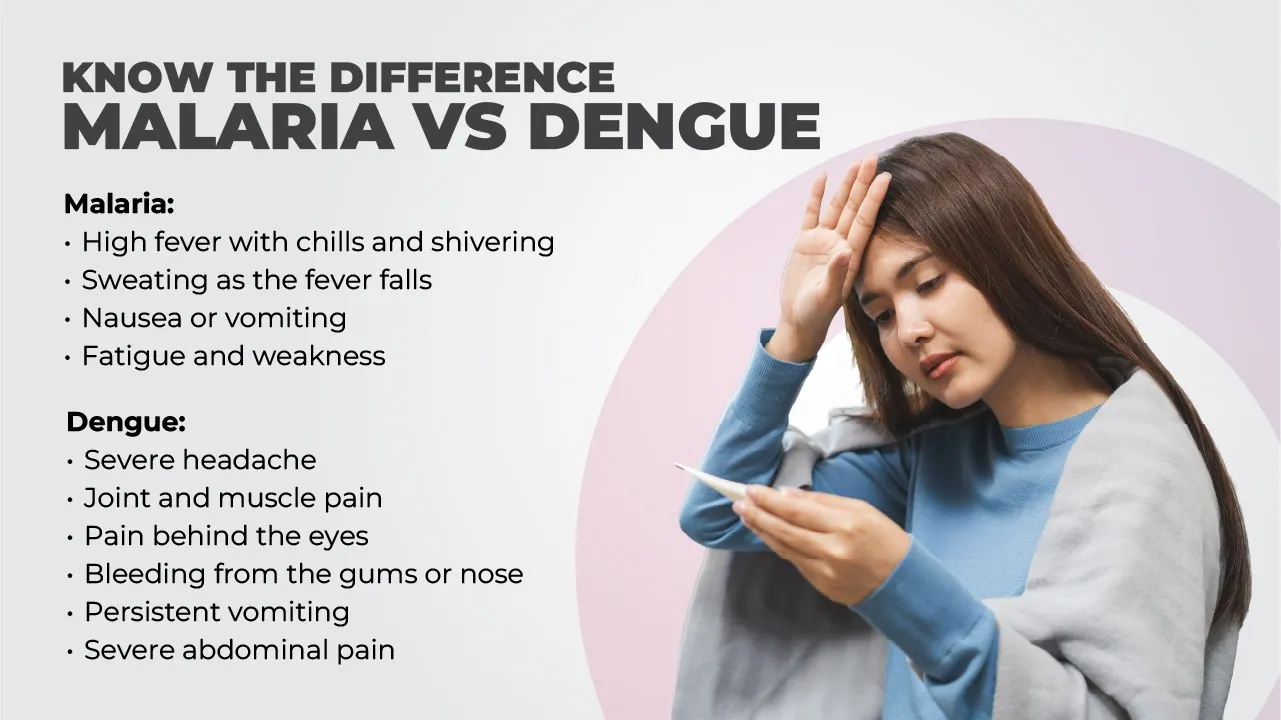
Malaria and dengue are two of the most common mosquito-borne diseases in India. Both can cause fever and discomfort, but they differ in how they affect the body and how doctors diagnose and treat them. According to the World Health Organisation (WHO), each year, almost 282 million cases of malaria and 5 million cases of dengue are observed worldwide. Therefore, people need to know the difference between malaria and dengue so they can spot signs early, get the right care, and take steps to prevent illness. This guide will walk you through how malaria and dengue differ, what signs they have, and how to avoid getting either of them.
What Are the Top Causes of Malaria And Dengue?
Malaria and dengue come from different infectious agents.
Malaria
- It is caused by a parasite of the Plasmodium family.
- Malaria is transmitted by the bite of an infected Anopheles mosquito.
- There are several types of Plasmodium. The two most common types in India are P. falciparum and P. vivax.
Dengue Fever
- It is caused by the dengue virus (DENV), which has four serotypes.
- Dengue is transmitted by Aedes mosquitoes, especially Aedes aegypti.
- The same mosquito species can transmit dengue more than once if different virus types circulate.
Both infections require another bite to spread from person to person. A mosquito first bites an infected person, then later bites a healthy person and transmits the organism.
What Is The Difference Between Malaria And Dengue?
The causes and symptoms of malaria and dengue mostly overlap, which creates confusion among individuals. Here’s a quick comparison to help you understand the difference between malaria and dengue:
| Feature | Malaria | Dengue |
|---|---|---|
| Causative Agent | Plasmodium parasite | Dengue virus |
| Mosquito Type | Anopheles | Aedes aegypti, Aedes albopictus |
| Bite Time | Night | Daytime |
| Incubation Period | 7–30 days | 4–10 days |
| Fever Pattern | Cyclical fever with chills | Sudden high fever |
| Skin Rash | Rare | Common |
| Risk of Bleeding | Low | Higher in severe cases |
| Severe Complications | Cerebral malaria, organ failure | Dengue haemorrhagic fever, shock |
| Rapid Diagnostic Tests | Available | Available |
Note: Anopheles mosquitoes bite at night, while Aedes mosquitoes bite during the day. This influences when people are most at risk.
How To Identify Malaria Or Dengue: Key Symptoms
Both diseases can cause fever. However, malaria vs dengue symptoms often differ in how they start and what additional signs appear.
Malaria Symptoms
Malaria typically begins with:
- High fever with chills and shivering
- Sweating as the fever falls
- Headache and muscle pain
- Nausea or vomiting
- Fatigue and weakness
In some cases:
- Anaemia can develop because the parasite infects red blood cells.
- Jaundice (yellowing of the skin) may occur if the liver is involved.
Malaria symptoms may come and go in cycles, often mirroring the parasite’s life cycle.
Dengue Fever Symptoms and Causes
Dengue occurs suddenly without showing any specific indications. However, your physician might suggest a test for dengue if you experience one or more of the following:
- Sudden onset of high fever
- Severe headache
- Pain behind the eyes
- Joint and muscle pain (often called “breakbone fever”)
- Nausea or vomiting
- Rash, which may appear a few days after the fever begins
More serious forms of dengue can cause:
- Bleeding from the gums or nose
- Easy bruising
- Severe abdominal pain
- Persistent vomiting
- Signs of shock (cold, clammy skin; restlessness)
These severe symptoms indicate complications. If any of these symptoms occur, immediately reach out to your primary care physician for the right advice.
How Are Malaria And Dengue Diagnosed?
In both cases, blood tests are needed to find out what is causing the fever.
Malaria Diagnosis
- A blood smear is examined under a microscope to find parasites.
- Rapid diagnostic tests (RDTs) can detect parasite proteins quickly.
- The physician will also repeat tests to monitor treatment response.
Dengue Diagnosis
- Blood tests detect dengue virus antigens or antibodies.
- Early in the illness, the NS1 antigen test can show that it is dengue.
- Complete blood count (CBC) can show low platelets and white cells, common in dengue.
Since symptoms overlap with other infections, lab tests are essential for accurate diagnosis.
Also Read: What are the symptoms of Malaria and How to prevent it?
How Are Malaria and Dengue Treated?
Treatment varies based on the cause and severity.
Malaria Treatment
- Antimalarial medications kill the parasite.
- Your physician will suggest medication based on the Plasmodium species and local resistance patterns of your region.
- Severe malaria might even need hospital care, intravenous medicines and close monitoring.
Dengue Management
- No specific antiviral drug exists for dengue.
- Treatment focuses on supportive care.
- Adequate fluids, rest, and paracetamol for fever are recommended.
- Aspirin and nonsteroidal anti-inflammatory medicines should be avoided because they may worsen bleeding.
- Severe dengue requires hospital care, fluid support, and close monitoring of platelets, blood pressure and signs of shock.
Who Is At Higher Risk?
Certain groups are more vulnerable to complications.
Higher Malaria Risk
- Young children
- Pregnant women
- People with weakened immune systems
- Travellers to high-transmission areas without immunity
Higher Dengue Risk
- People living in densely populated urban areas
- Those with a previous dengue infection (risk of more severe disease)
- Individuals in regions during peak mosquito seasons
Both infections are more likely in the rainy season, when mosquitoes breed in standing water.
How to Prevent Malaria and Dengue?
Small daily habits, when followed consistently, can greatly reduce the risk of malaria or dengue infection. Here are some basic prevention strategies that you should start considering right away, especially if you reside in a place where mosquitoes commonly breed:
Personal Protection
- To prevent malaria, sleep under insecticide-treated bed nets, especially at night. For dengue, use mosquito repellents during the day.
- Wear long sleeves and pants at dusk and dawn.
- Use screens on doors and windows.
Environmental Control
- Remove or cover standing water around homes.
- Clean water containers regularly.
- Use larvicides in water that cannot be emptied.
Special Measures for Travel
- Talk to a doctor about antimalarial medicines before travel.
- Take the full course as prescribed.
- Buy medicines early, before symptoms develop.
These steps reduce the chance of infection and protect your family.
When To Get Professional Medical Help?
You should see a doctor right away if you have one or comb combination of the following problems:
- High fever that lasts more than 2 days
- Severe headache or eye pain
- Difficulty breathing or chest pain
- Severe abdominal pain
- Bleeding gums, nosebleeds, or unusual bruising
- Signs of dehydration (dry mouth, reduced urination)
- Confusion or irritability
How Long Is the Recovery Period?
Recovery time varies from person to person. It depends on which infection you have and how quickly treatment begins.
Malaria
- With early and timely treatment, mild malaria may improve in 2–3 days.
- Severe malaria may take longer and require hospitalization.
Dengue
- Most of the time, fevers last between 3 and 7 days.
- Full recovery will take anywhere between one to two weeks.
- Blood counts are monitored during recovery to avoid complications.
You also need to take proper rest, consume plenty of fluids, and get regular follow-up visits to heal quickly.
Visit Apollo Spectra for Expert Advice and Care!
If you or someone you care about experiences high fever, headache, body pain, rash or unusual bleeding, immediate consultation with your physician is important. At Apollo Spectra, specialists offer accurate diagnostic testing and personalized treatment plans for dengue and malaria symptoms and prevention. They can advise on prevention, early detection, and care tailored to your health needs. Do not wait for symptoms to worsen. Schedule your appointment right away!
Recent Blogs



Get Expert Health Advice
Related Blogs


NOTICE BOARD
CONTACT US
FOR PARTNERSHIP
CONTACT US
FOR PARTNERSHIP
.svg)
.svg)
.svg)
.svg)


 Book Appointment


Need Help?
Request a Callback
Have questions about your treatment or consultation? Our experts are here to help.