

NT/NB Scan in Pregnancy: Importance & Normal Range
December 19, 2025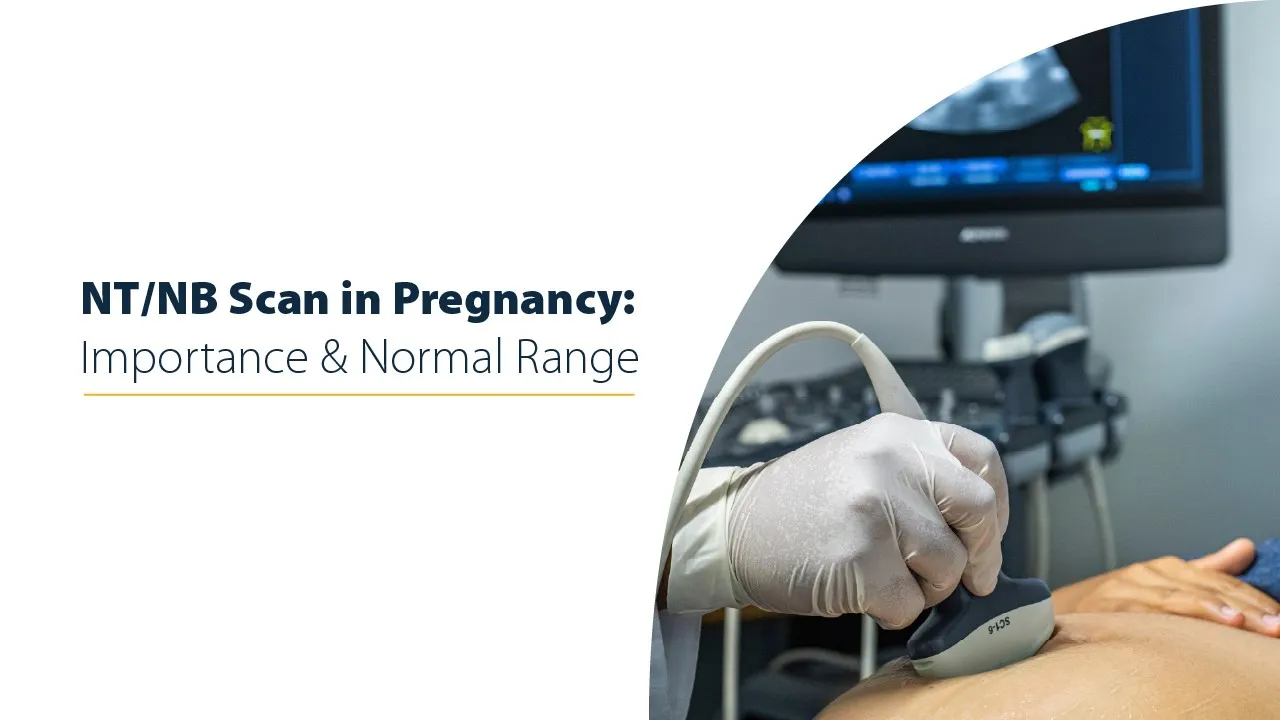
Did you know that every year, about 30,000 to 35,000 children are born with Down syndrome in India? This comes out to roughly 1 in 800 to 850 births. Down syndrome is one of the most common chromosomal disorders that occurs in newborns. These chromosomal disorders can now easily be detected through first-trimester screening tests (11th and 14th week of gestation), such as NT/NB scans. NT means measuring the Nuchal Translucency (NT), which is the fluid-filled cavity present at the back of the fetus's neck. Whereas, NB means examining the Nasal Bone. These scans together give a clear picture of the structural and genetic make-up of the developing fetus.
Let us know everything about all aspects of NT/NB analysis, its importance, procedure, and what one may expect from this analysis.
What Does the NT/NB Scan Measure?
The NT/NB prenatal ultrasound scan is used to determine the thickness of the nuchal fold, a part of the tissue at the back of the neck of a fetus. Increased fluid in this area determines the risk of the fetus developing chromosomal abnormalities such as trisomy 21 (Down Syndrome), trisomy 18 (Edward Syndrome), and trisomy 13 (Patau Syndrome). Higher NT values may also indicate a higher risk of congenital heart disease. Additionally, it can reveal some of the important anatomical structures of the fetus.
NT/NB Normal Range
Nuchal transparency is considered normal if it is less than 3.5 mm. Normal ranges indicate that the fetus is unlikely to have a chromosomal or genetic problem. However, high levels of Fetal nuchal translucency measurement may indicate an increased risk of birth defects. Your doctor may suggest additional chromosomal abnormality detection tests, such as a dual marker test, to confirm your results.
Here is a table outlining the measurement of NT and its outcome on babies:
| Nuchal Translucency Measurement | Outcome |
|---|---|
| Less than 3.5 mm | Normal |
| 3.5 – 6 mm | Borderline |
| 6 mm or higher | High Risk |
Who Should Get the NT NB Scan?
An NT/NB scan is required for all pregnant women during the first trimester. However, women falling into any one of the following categories must undergo this scan:
- Women over 35 years old.
- Women with a family history of chromosomal abnormalities.
- A woman whose previous child was born with a chromosomal abnormality.
- Expecting parents who are concerned about their baby's health.
How to Prepare for the NT NB Scan?
The NT/NB test is a non-invasive down syndrome screening in pregnancy that requires little preparation. Here's what you can expect before the procedure:
- Stay hydrated and wear comfortable clothes: Drink 8 to 10 glasses of water per day. Wear comfortable clothes and avoid applying creams and lotions on the abdomen.
- Discuss with the doctor: If you have a family history of a genetic disorder, talk to your doctor.
- Stay calm: This is a painless test method. Remain relaxed, calm and comfortable so that the procedure goes smoothly.
What is the Procedure for an NT/NB Scan?
NT Scan is a simple ultrasound examination that is undertaken at a clinic or a hospital:
- Preparation
The pregnant woman lies on an examination table, and a transparent gel is placed on the abdomen. An ultrasound probe (transducer) is passed over the abdomen in order to take pictures of the baby. Some cases may need a transvaginal scan if the baby’s position is not clear.
- Measurement
The technician measures the nuchal translucency (fluid thickness at the back of the neck of the baby). To determine gestational age, the crown-rump length (CRL) is also measured.
- Completion
The process lasts approximately 20 to 30 minutes. The measurements and pictures are used to determine the risk if the developing fetus has a chromosomal abnormality.
Factors Affecting the NT NB Scan Results
Certain factors can affect the overall results of the NT/NB scan, such as:
- Infant Position: It might also be difficult to capture some clear images in case your child is not in a comfortable position.
- Proficiency of Sonographer: The experience of the sonographer and their specialised qualifications also determine how accurate their measurements will be.
- Other Variables: Different markers that determine the measurement may include the nasal bone, tricuspid valve flow, and ductus venosus resistance.
In case of abnormal screening results, the gynaecologist might recommend the following diagnostic tests:
- Chorionic Villus Sampling: CVS is a procedure that entails the collection of a tissue sample of the placenta to test against chromosomal and genetic abnormalities.
- Amniocentesis: Amniocentesis involves the removal of amniotic fluid in the uterus using a needle in order to perform genetic tests.
- Fetal Echocardiogram: A fetal echocardiogram can also be carried out to check the heart of the baby.
What Happens After an Abnormal NT/NB Result?
An abnormal NT/NB value does not always mean a confirmed problem. It simply guides your doctor to look deeper through follow-up tests. This clarity helps you stay informed and reduces unnecessary fear during pregnancy.
Also Read: Role of Ultrasound Scan in Pregnancy
Choose Apollo Spectra for an Accurate NT/NB Scan!
NT/NB scan is a necessary first-trimester screening test that evaluates possible chromosomal abnormalities through measuring the clarity of the nuchal region and nasal bone. The scan provides invaluable data to determine the need for subsequent tests.
If you also have some doubts while undergoing the important phases of your life, connect with professionals at Apollo Spectra. Our advanced imaging and careful evaluation give you clarity about your baby’s health and help you understand the next steps with confidence.
Recent Blogs



Get Expert Health Advice
Related Blogs


NOTICE BOARD
CONTACT US
FOR PARTNERSHIP
CONTACT US
FOR PARTNERSHIP
.svg)
.svg)
.svg)
.svg)


 Book Appointment


Need Help?
Request a Callback
Have questions about your treatment or consultation? Our experts are here to help.