

Precautions After Hydrocele Surgery
March 5, 2026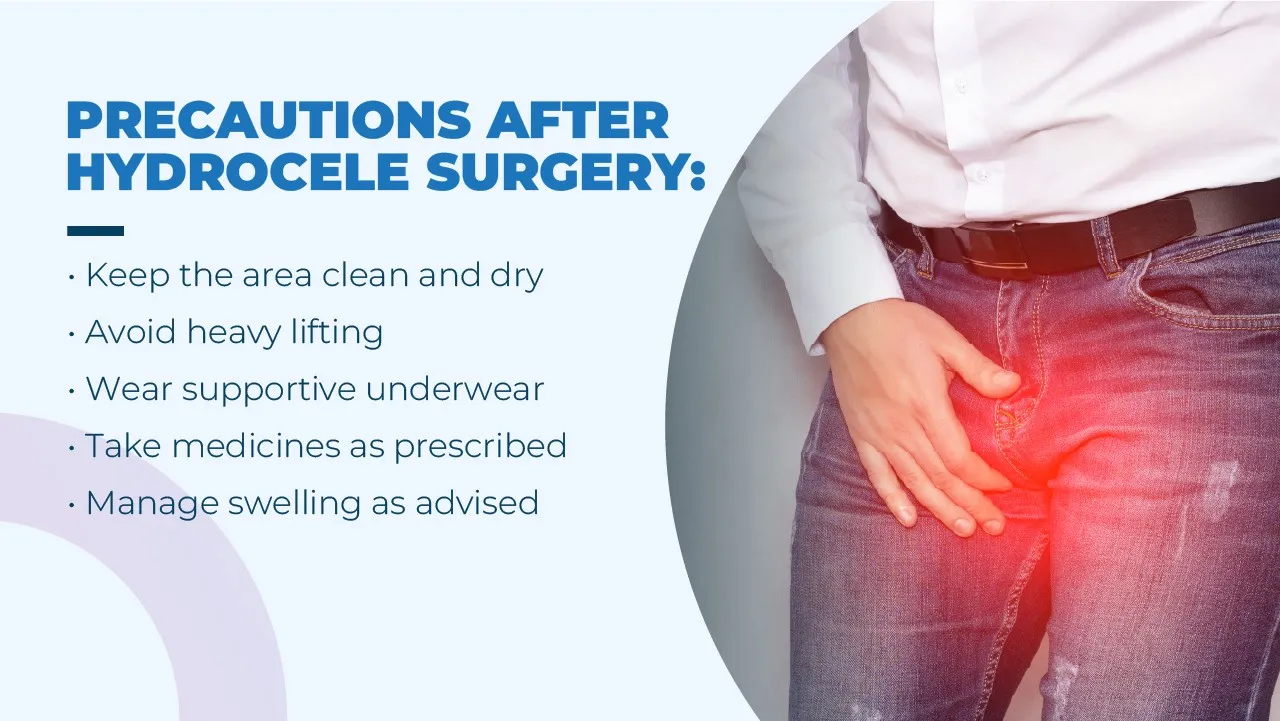
Hydrocele surgery is a safe and effective procedure that relieves scrotal swelling and discomfort caused by fluid accumulation around the testicle. Surgery corrects the problem, but healing depends heavily on how well post-operative care is followed. Proper precautions reduce pain, lower infection risk, and support long-term scrotal health. This guide explains what to expect after surgery and how to recover safely, right post hydrocele surgery care with current surgical and urology care standards.
What Is Hydrocele Surgery and When Is It Needed?
Hydrocele surgery, which is also known as hydrocelectomy, removes the fluid that builds up around the testicle inside the scrotum. The fluid collects within the tunica vaginalis and causes painless swelling in most cases. Your surgeon will recommend surgery in the following situations:
- When swelling in the scrotum becomes large, uncomfortable, cosmetically concerning, or associated with pressure
- When infection, bleeding, or diagnostic uncertainty exists.
Hydrocele surgery is usually performed under spinal or general anaesthesia. Surgeons remove or evert the fluid sac to prevent re-accumulation. Most procedures follow a day-care or short hospital stay model. Modern surgery methods try to keep tissues healthy and cause as little damage as possible.
What Does Post Hydrocele Surgery Care Involve?
Post hydrocele surgery care begins immediately after discharge. During the first few days, the testicles may feel heavy or sore. You can expect mild swelling and bruises that will go away over time. Your surgeon will recommend the following:
- Scrotal support using a snug undergarment. This support keeps fluid from pooling and eases the stress on healing tissues.
- During the first 24 to 48 hours, ice packs may be suggested to help keep the swelling down. However, ice should never be applied directly to skin.
- Wound care is also important. The incision must stay clean and dry.
- Most of the time, sponge baths are better until the stitches heal. Report right away if there is any drainage, swelling, or warmth around the wound.
- Pain control usually involves prescribed analgesics.
- Anti-inflammatory medications are used cautiously based on individual risk factors.
- Antibiotics may be prescribed if infection risk exists.
What Are The Effective Hydrocele Surgery Recovery Tips?
Hydrocele surgery recovery tips focus on rest, protection, and gradual return to routine. The body heals faster when strain is minimised. Some helpful ways to heal are:
- Getting enough rest in the first week
- Having the scrotum raised while lying down
- Putting on comfortable pants every day
- Making sure you stay hydrated and eat right
- Remembering to take medications exactly as given
Swelling may fluctuate during recovery. Due to internal healing, the area around the cut may feel hard for a short time. This change doesn't mean that the surgery didn't work.
During follow-up visits, doctors can see how well the healing is going. Unless problems are thought to be present, ultrasound imaging is not usually required.
Dos and Don’ts After Hydrocele Surgery
Dos and don’ts after hydrocele surgery provide structure to daily decisions during recovery.
| Do’s | Don’ts |
|---|---|
| Keep the surgical area clean and dry at all times | Do not strain your body or move heavy things. |
| Attend all scheduled follow-up appointments | Do not strain when you go to the toilet. |
| Walk gently to maintain healthy blood circulation | Do not apply heat to the scrotal area. |
| Monitor for fever, increasing pain, or unusual swelling | Do not resume sexual activity before medical clearance. |
| Wear proper scrotal support during waking hours | Do not ignore sudden redness or rapid swelling. |
Also Read: Foods to avoid with Hydrocele
How To Manage Hydrocele Operation Aftercare At Home?
Hydrocele operation aftercare at home focuses on reducing scrotal strain, preventing constipation, and supporting tissue healing during the first four to six weeks. Here are the more details:
Diet Guidelines After Hydrocele Surgery
Diet directly affects recovery because straining during bowel movements increases pressure on the surgical site and delays healing. Here are some recommended foods:
- Whole grains such as oats, brown rice, and whole wheat roti
- Fresh fruits like papaya, pear, apple, and orange
- Vegetables such as bottle gourd, spinach, carrot, and pumpkin
- Lean protein sources including dal, eggs, fish, and curd
- Adequate fluids, with at least 2.5 to 3 liters of water daily
Following is the list of foods you should limit or avoid:
- Fried foods and deep-fried snacks
- Processed foods high in salt
- Red meat during the first week
- Carbonated drinks and alcohol
- Excess tea or coffee
High fibre intake prevents constipation. Reduced straining protects internal sutures. For the first few days, if your bowel movements are still hard, your doctor may give you a stool softener.
Sleep and Positioning at Home
Sleep position influences swelling and pain levels. Elevating the scrotum supports lymphatic drainage and reduces overnight fluid accumulation.
Best Practices
- Sleep on your back with a folded towel placed under the scrotum
- Use a firm mattress to avoid sagging
- Maintain scrotal elevation for at least the first 7 to 10 days
Side sleeping may be used if comfortable, but scrotal support should remain in place during sleep.
Mobility and Daily Movement
Complete bed rest is not advised. Gentle movement prevents stiffness and improves blood circulation. Here’s the list of allowed activities:
- Short walks inside the house
- Standing for brief periods
- Light self-care activities
Activities To Avoid After Hydrocele Surgery
- Avoid prolonged sitting on low chairs
- Avoid squatting
- Avoid climbing multiple flights of stairs repeatedly
Movement should never increase pain or swelling. Activity levels should rise gradually based on comfort.
Driving And Travel Precautions
Driving is usually avoided for at least 5 to 7 days. Pain medication may slow reaction time. Sudden braking can strain the surgical area.
Long-distance travel should wait until swelling and tenderness reduce significantly. Frequent breaks are essential if travel becomes unavoidable.
Sexual Activity And Intimacy
Sexual activity places pressure on healing tissue. Early resumption increases the risk of pain, swelling, and internal bleeding. Most surgeons recommend the following:
- Avoid sexual activity for at least 3 to 4 weeks
- Resume only after pain and tenderness resolve
- Get medical clearance before restarting intimacy
If you have mild discomfort during early attempts, get a quick reassessment rather than persistence.
How Long Does Hydrocele Surgery Recovery Take?
Hydrocele surgery recovery time varies among individuals. Most men experience noticeable improvement within two weeks. Complete internal healing may take four to six weeks. The table below summarises how long does hydrocele surgery recovery takes:
| Timeframe | Expected Recovery Changes |
|---|---|
| First 48 hours | Swelling and tenderness present |
| Week One | Pain reduces, bruising fades |
| Week Two | Walking improves, support still needed |
| Weeks Three to Four | Return to light work |
| Weeks Four to Six | Resume normal activities |
Residual firmness may persist for several weeks. This finding usually reflects scar remodelling rather than recurrence.
A Smooth Recovery Begins With Expert Guidance!
Hydrocele surgery offers lasting relief when recovery precautions are followed correctly. Proper care protects results and restores comfort without unnecessary delays. Moreover, you can improve healing by properly limiting and respecting the recovery timeline.
Looking for the right guidance after hydrocele surgery, connect with the expert surgical teams at Apollo Spectra. We offer complete postoperative care, advanced surgical techniques, and even personalised recovery plans. Schedule your next appointment with us today!
Recent Blogs



Get Expert Health Advice
Related Blogs

NOTICE BOARD
CONTACT US
FOR PARTNERSHIP
CONTACT US
FOR PARTNERSHIP
.svg)
.svg)
.svg)
.svg)


 Book Appointment


Need Help?
Request a Callback
Have questions about your treatment or consultation? Our experts are here to help.