

Pterygium Surgery: Before and After
December 23, 2025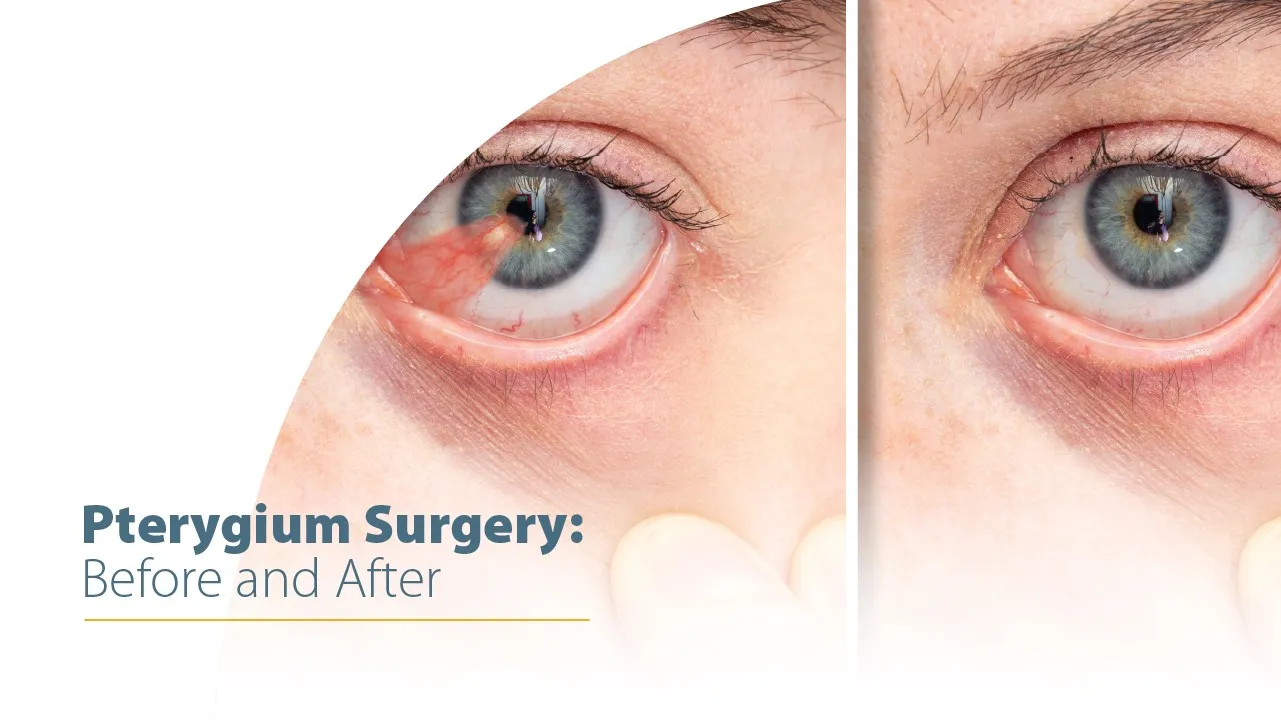
A pterygium is a fleshy, wing-shaped growth that moves from the white part of the eye toward the cornea. Most people are able to manage mild cases with the help of lubricating drops. However, surgery becomes important when the growth begins to cause irritation, redness or blurred vision. Therefore, you must have a clear understanding of how the eye looks before and after treatment. This will help you prepare for the healing process with confidence.
This guide will walk you through what happens during recovery, how long the eye takes to heal and what steps help prevent recurrence. You will also understand the role of grafts, post-operative care and the expected pterygium recovery time after surgery.
What Is a Pterygium and Why Is Surgery Needed?
A pterygium forms when the conjunctiva thickens and grows across the cornea. The condition is linked to long hours in sunlight, dust exposure and a dry environment. Most cases remain harmless for a long time. Symptoms begin when the growth becomes large enough to irritate the surface of the eye. Surgery becomes necessary when the growth affects vision, causes repeated irritation or continues to enlarge.
The aim of the procedure is simple. The surgeon removes the pterygium and restores a clear, smooth surface. A conjunctival graft may be placed over the area to lower the risk of recurrence. This graft becomes an important part of the healing process.
What Happens Before Pterygium Surgery?
Before surgery, the pterygium appears as a raised, fleshy patch on the white part of the eye. It may extend onto the cornea and create a visible triangle-shaped mark. Some patients notice that it becomes red and swollen after outdoor activity. Others observe mild blurriness if the growth reaches the visual axis.
Symptoms
- Many patients describe a gritty feeling or irritation that does not improve with drops.
- The surface of the eye may show redness that worsens toward the end of the day.
- People who work outdoors often report that sunlight worsens the discomfort.
What Happens During Pterygium Surgery?
The procedure is usually done under local anesthesia. The eye is made numb, and the surgeon removes the growth from the cornea and conjunctiva. A thin piece of healthy conjunctiva is then placed over the exposed area. This is known as a conjunctival autograph. The graft lowers the chance of new tissue forming in the same area.
Stitches or tissue glue may be used to secure the graft. The choice depends on the surgeon’s preference and the size of the growth.
What Can You Expect Immediately After Surgery?
Patients often leave the hospital on the same day. The eye may be patched for a few hours to reduce irritation. You may notice:
- Redness
- Mild swelling
- A gritty or foreign body sensation
- Tearing
- Light sensitivity
These symptoms are normal and improve with time. Doctors prescribe antibiotic drops to prevent infection and steroid drops to reduce inflammation. These medications also support smoother healing and help control the risk of recurrence.
Pterygium Recovery Time: What to Expect
Healing takes place in stages. The eye does not return to a normal appearance immediately. Recovery is gradual and depends on the size of the graft, the patient’s tear film and overall eye health.
Day 1 to Week 1
The eye may appear red and irritated. Some patients notice a patch of blood under the conjunctiva. This looks alarming but heals naturally. Vision may remain blurry during the first few days.
Discomfort usually improves within the first week.
Week 2 to Week 4
Redness begins to fade. The graft becomes more stable. Patients often return to work or daily activities during this time. Doctors encourage people to avoid rubbing their eyes and to limit exposure to dust.
One to Three Months
The eye appears clearer and smoother. Vision becomes more stable. The graft blends with the surrounding tissue. Many patients say the eye looks healthier than before surgery.
Full recovery depends on individual healing. Most people reach their final result within a few months.
Conjunctival Graft Healing
The graft plays a major role in long-term success. It covers the bare area left after removing the pterygium. This reduces inflammation and supports smooth regrowth of the surface. A graft:
- Lowers the recurrence rate
- Reduces scarring
- Supports faster healing
- Protects the cornea during the recovery period
A recurrence can still happen, but the risk becomes much lower when a graft is used.
Possible Pterygium Surgery Complications
Most patients recover without difficulty. A few may experience temporary or mild pterygium surgery complications during the healing period, such as:
- Redness
- Dryness
- Local irritation
- Mild pain
- Small areas of graft swelling
Rare complications may include graft displacement, infection or regrowth of the pterygium. These complications remain uncommon and are usually managed with timely follow-up care.
Doctors encourage patients to attend all review visits during recovery, as this helps them identify and address early signs of complications.
How to Prevent Pterygium Recurrence
Some patients may experience recurrence, particularly those who are very exposed to dust or direct sunlight. By taking the following measures, you can reduce the risk:
- Always wear sunglasses with UV protection outdoors.
- Shade yourself from the sun by wearing a hat.
- Use the lubricating drops prescribed by your doctor to keep your eyes moist.
- Do not rub your eyes.
- Take all prescribed drugs as directed.
Wearing protective eyewear is important for patients who work in locations with strong winds or dust. Moreover, to keep your eyes in teh long run, go for a regular health checkup.
When to Seek Treatment?
Pterygium surgery becomes important when:
- The growth affects vision
- Redness and irritation worsen
- There is a cosmetic concern
- The pterygium keeps increasing in size
- Glasses no longer correct the visual problem
Also Read: Precautions after Cataract Surgery
Visit Apollo Spectra for Expert Pterygium Care!
Your eyes play a major role in your comfort and confidence. You now understand how pterygium forms, how surgery removes it and how recovery takes place over time. If you want clear guidance about pterygium recovery time, treatment planning or long-term prevention, specialists at Apollo Spectra can support you with the right care. They will assess the size of the growth, suggest the best technique and prepare a personalized plan for safe healing.
Do not wait for symptoms to increase or for the growth to affect your vision. Book your appointment with our experts today. We even offer the most affordable pterygium surgery cost in India.
Recent Blogs


Get Expert Health Advice
Related Blogs


NOTICE BOARD
CONTACT US
FOR PARTNERSHIP
CONTACT US
FOR PARTNERSHIP
.svg)
.svg)
.svg)
.svg)


 Book Appointment

Need Help?
Request a Callback
Have questions about your treatment or consultation? Our experts are here to help.