

Top 10 Ways to Prevent a Hernia from Developing
January 19, 2026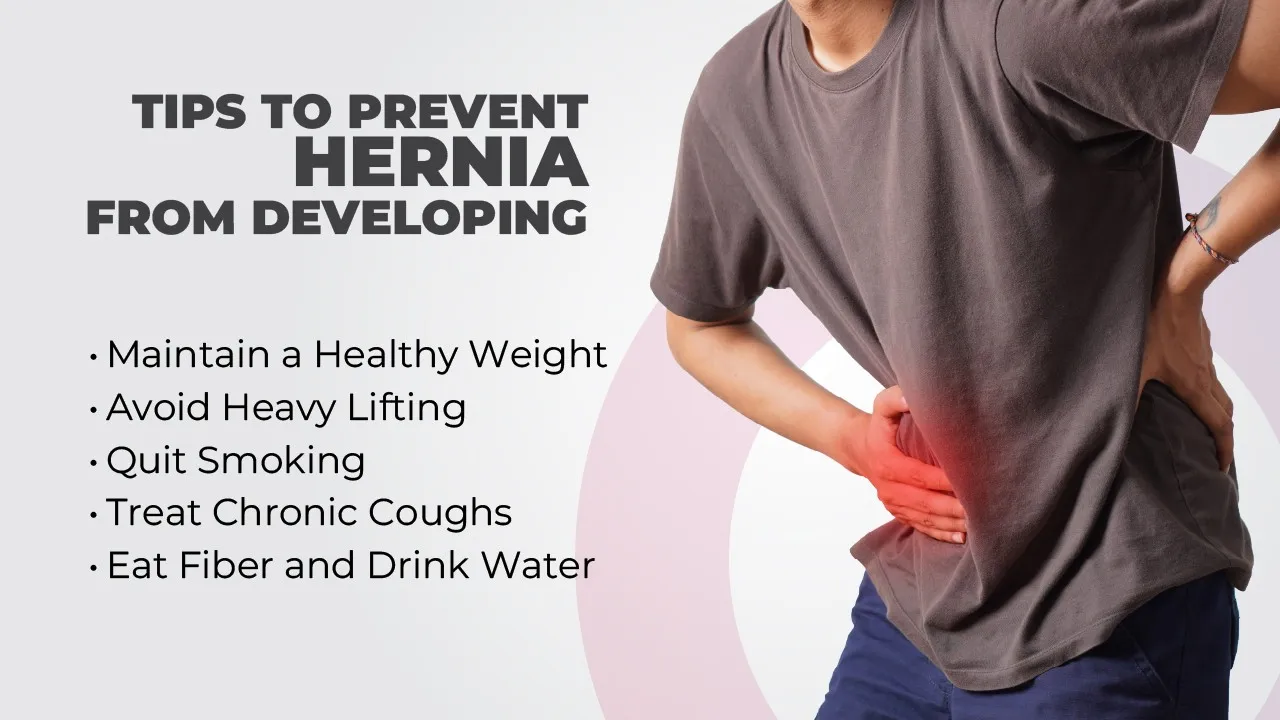
A hernia occurs when an internal organ or tissue pushes through a weak spot in the muscle or the nearby tissues. Most cases of hernia are linked to family genetics; others might develop due to poor lifestyle habits such as improper lifting or straining. According to the Healthcare Bulletin (2025), India sees around 1.96 million cases of inguinal hernia each year. Moreover, most hernias develop slowly and stay harmless for years, rarely causing pain early on. But they are usually manageable, and most people go about their lives comfortably without any trouble. This guide explains the types of hernia, their causes and symptoms, along with the top 10 hernia prevention tips.
What Is a Hernia?
A hernia occurs when an internal organ or other body part bulges through the wall of muscle or tissue that contains it. Most are benign at first and stay harmless for years. However, some hernias can grow over time as repeated pressure, such as coughing, lifting, constipation, etc., causes the weak spot to become bigger with time.
What Are The Most Common Types of Hernias?
Hernias are categorised mainly based on the location where they occur in the body. Some common types are:
| Type of Hernia | Location | Main Symptoms |
|---|---|---|
| Inguinal Hernia | Inner groin | A bulge that may cause pain When standin, or coughing. |
| Incisional Hernia | Previous surgical scar | lump that develops at the site of an old surgical incision or injury. |
| Umbilical Hernia | Belly button (navel) | Soft swelling at the navel |
| Femoral Hernia | Upper thigh | Painful lump near the top of the leg |
| Hiatal Hernia | Upper stomach / diaphragm | Heartburn and acid reflux (no outer lump). |
What Causes Hernia in Adults?
Hernias occur when muscles become weak due to various strains over time. The causes can be grouped into two main types:
Congenital Causes
In some cases, a person might have naturally weaker spots in their muscles from the time of their birth. Some muscles do not form completely during development, often because abdominal walls fail to close properly before birth. Moreover, these can stay dormant until adulthood.
Acquired Causes
Most adult hernias develop from everyday activities, which keep adding up over time:
- Extra body weight, pregnancy, or fluid buildup increases pressure on weak abdominal areas.
- Heavy lifting with poor technique or forceful coughing can trigger a visible bulge.
- Muscle strength naturally declines after forty, raising hernia risk.
- Surgical scars may create weak spots where tissue can push through.
- Repeated straining during bowel movements or frequent coughing adds ongoing pressure.
Top 10 Tips to Prevent Hernia from Developing
Most hernias can be prevented with small, everyday habits that reduce pressure on your abdominal muscles and keep them strong. Making simple lifestyle changes to prevent hernia in your daily routine is the most effective and sustainable approach. Check out the following practical hernia prevention tips:
- Maintain a Healthy Weight
Obesity is a major hernia risk factor. All the extra body fat works as extra weight, which puts pressure on the abdominal wall. According to a study conducted by the Global Burden of Disease, the excess body fat increases the abdominal pressure by 30-50%.
Losing the fat relieves that constant pressure. Even a small weight reduction can lower the daily strain on your muscles. Focus on eating a balanced diet and add some form of exercise to your daily schedule.
- Lift With Your Legs
Improperly lifting stuff can cause a hernia. Never bend at the waist, as it forces the lower abdominal muscles to bear the majority of the weight. To pick up any object:
- Stand close to the object, with your feet shoulder-width apart.
- Next, always squat down, keeping your back straight, and power up with your legs.
- Make sure that your core is engaged before you lift. For this, exhale so that your abdominal muscles tighten.
- Avoid Heavy Lifting
Avoid lifting heavy objects on your own, especially if you are not trained to do so. Sudden or improper lifting sharply increases abdominal pressure and can worsen or trigger a hernia. Use assistive tools such as dollies, split loads into smaller portions, or ask for help. When exercising, increase weights gradually and maintain proper form. Poor technique or lifting beyond your capacity places unnecessary strain on the abdominal wall and connective tissues.
- Quit Smoking
Smoking weakens tissues and causes coughing fits at once:
- Muscles in our body are held together by collagen, a protein. Smoking reacts with collagen and breaks it down. This causes the abdominal walls to become thin and brittle.
- Nicotine causes the blood vessels to tighten, which cuts off the oxygen supply to the muscles. As a result, muscles become weaker and cannot repair themselves.
- Smoking causes irritation in the windpipe and gut. This causes violent coughing, which stresses the muscles.
However, when you quit smoking, the blood flow improves and coughing stops gradually. This gives muscles a chance to repair themselves.
- Treat Chronic Coughs
A lingering cough strains your belly by creating sudden pressure. Moreover, repetitive coughing can cause more harm. To manage the episodes of chronic cough, take an allergy test to figure out which substance can irritate your throat and lead to repeated coughing episodes. Based on the allergy, doctors provide different medications, such as antihistamines or anti-allergens, which help you control the coughing. If the cough lasts longer than a week, it's best to get it checked. The main cause of cough may vary from asthma, cold, or reflux.
- Eat Fiber and Drink Water
Constipation can increase the risk of hernia by 8.39x times. Straining on the toilet creates high internal pressure, which increases the risk of developing a hernia. So, how to avoid hernia naturally? Here are some of the quick dietary fixes:
- Try some high-fibre salad recipes, and include them in your meals. Another great option is fruit bowls, which are the right source of various vitamins.
- Pairing fiber with plenty of water helps prevent constipation, which lowers the chances of a hernia. Aim to drink at least 8-10 glasses or 2.5-3 liters of water every day.
Also Read: Difference between direct and indirect Hernia
- Strengthen your Core
There are different exercises to prevent hernia, such as planks, pilates, and yoga, which help tighten the entire deep layer of muscle. Moreover, be careful while doing workouts like sit-ups or crunches. They squeeze the abdomen hard, which can cause pressure. Therefore, always focus on the quality of the workout, making sure the form is correct.
- Rest Fully After Surgery
Incisions or cuts form temporary weak spots in the muscles. If patients rush recovery, it can tear healing tissue, which can cause hernias. According to an NIH (Nation Library of Medicine) article, even if the surface skin looks healed, underneath it has only gained 75% of the original strength back. Therefore, follow your doctor's lifting restrictions so that the scar heals fully.
- Control Blood Sugar
High blood sugar slows tissue repair, as it slows down the flow of oxygen and nutrients to healing tissues. Managing diabetes helps the body quickly repair tiny micro-tears that occur in muscles naturally every day, making muscles stronger. Regularly check your glucose levels. This will help you maintain sugar levels steady.
- Don’t Ignore Pain Signs
Pain is a warning sign. Never try to push through a pulling or burning feeling in your abdomen. That sensation means your muscle wall is stretching dangerously thin. Stopping to rest the moment you feel it removes the pressure, preventing a minor strain from tearing open into a full hernia. It relaxes the muscles so they can recover.
Get Expert Hernia Prevention Tips at Apollo Spectra!
Hernia was firstly repaired using modern medicine in 1884. However, the condition remains widespread today. You can protect yourself from developing a hernia with mindful practices such as staying active, lifting smart, and eating a healthy diet. However, if you notice bulging, pain during activity, or unexplained discomfort, immediately get expert advice.
At Apollo Spectra, our specialists focus on providing the right hernia prevention tips. We are here to guide you through the specific lifestyle changes based on your health. Book an appointment today!
Recent Blogs

Get Expert Health Advice
Related Blogs

NOTICE BOARD
CONTACT US
FOR PARTNERSHIP
CONTACT US
FOR PARTNERSHIP
.svg)
.svg)
.svg)
.svg)


 Book Appointment


Need Help?
Request a Callback
Have questions about your treatment or consultation? Our experts are here to help.