

What Causes Swollen Breasts?
March 11, 2026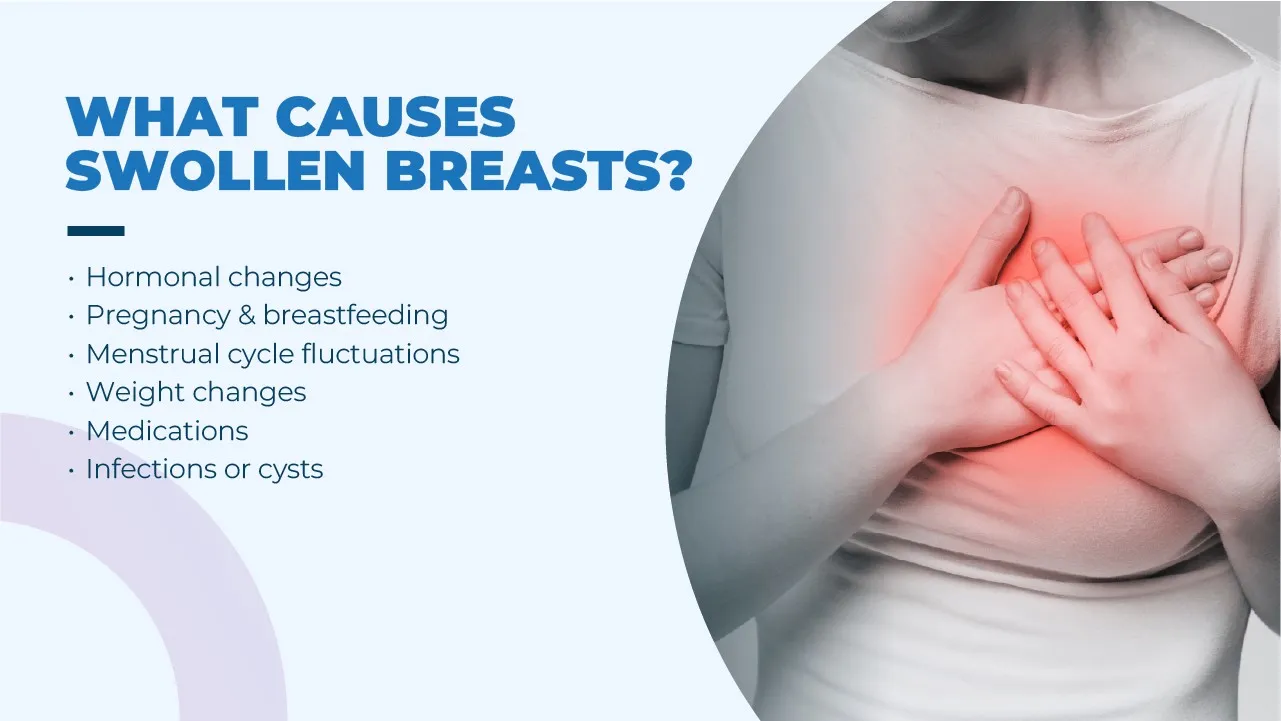
Most women experience some form of breast swelling at one time or another. Swollen breasts are usually easy to treat, but on rarer occasions, they can be a sign of something more serious. Breasts are made up of four tissue structures: fat tissue, milk ducts, glands, and connective tissue.
The fat (adipose) tissue is often subject to fluctuations in fluid volume. This can cause your breasts to swell and result in soreness or tenderness. However, there can be several other breast tenderness and swelling reasons that we will discuss in this guide.
Common Symptoms of Breast Swelling
Breast swelling can often cause noticeable changes. For example, a person’s breasts might become noticeably larger. The veins in your breasts might also become more visible because the swelling brings them closer to your skin. Other common symptoms may include:
- Feeling of heaviness in the breast
- tenderness or discomfort around the breast and up into the armpit
- Changes in the texture of the breasts or the skin around them
- Breasts may also feel warmer or hot to the touch
- Hardened lumps in the breast tissue
What Is the Top Breast Swelling Causes?
There are several factors that can cause breast swelling, which can range from harmless to serious. The most common breast swelling causes are described as follows:
- Premenstrual Syndrome (PMS)
PMS is one of the most common causes of breast swelling. Your estrogen levels increase before the beginning of menstruation. This hormonal shift can cause breast swelling before periods. During this time, your breast ducts and milk glands become enlarged.
- Inflammatory Breast Cancer
In rare cases, breast swelling can also be a symptom of inflammatory breast cancer. It can cause your breasts to swell because of blocked lymph vessels. Your breast tissue may also appear pitted, such as an orange peel. Remember that the tumours in your breasts can manifest as painful and hard lumps.
- Pregnancy
Breast swelling is often one of the earliest signs of pregnancy. Hormonal changes, especially rising estrogen and progesterone levels, prepare the breasts for milk production. This causes increased blood flow, making the breasts feel fuller, heavier, and tender. Swelling may continue to increase as pregnancy progresses.
- Fibrocystic Breast Changes
This is another common disease that many women have that is not cancer. Changes in hormones can also lead to the growth of fluid-filled lumps and fibrous tissues in the breasts. This makes the area grow, pain, and feel lumpy, especially before your period.
- Mastitis or Breast Infection
Mastitis is an infection of the breast tissue and is common in breastfeeding women. Bacteria get in through cracked nipples or milk ducts that are closed. In the affected breast, this can cause it to swell, turn red, feel warm, and cause pain. In these situations, fever and flu-like symptoms are also common and need medical help.
How is Breast Swelling Diagnosed?
There are several ways to figure out why your breasts are swollen, and the right choice of test or diagnosis depends on your primary care physician. Mostly, the following tests are suggested to identify the root cause of swollen breasts:
- Clinical Breast Exam
During a clinical breast exam, a healthcare provider carefully examines the breasts and checks nearby lymph nodes in the neck and underarm for swelling or tenderness. This helps identify changes such as lumps, skin thickening, or signs of infection or inflammation.
- Mammogram
A mammogram is an X-ray of the breast that helps detect early signs of cancer. A healthcare provider may recommend that you undergo this scanning if they notice an unusual thickening and a breast lump. This also applies if there is a focused area of swelling in your breast tissue. Then, they evaluate the area of concern found during the breast exam or diagnostic mammogram.
- Ultrasound
An ultrasound exam uses sound waves to produce images of the breasts, and it's often recommended along with a mammogram. It helps analyse specific structural changes in your body, such as cysts, solid masses, or fluid-filled sacs. Ultrasound is especially useful for evaluating a specific area of swelling or pain, as it can identify changes that may not be visible on a mammogram
- Breast Biopsy
Areas of thickening, suspicious breast lumps, or unusual areas seen during imaging exams may require a biopsy. This is required before your doctor can make a diagnosis to detect conditions such as cancer, cysts, infections, or inflammations. Your doctor usually obtains a small sample of the breast tissue from the area in question and sends it to the lab for analysis.
Also Read: What Causes Tonsil Stones?
Is Breast Swelling Normal?
Yes, breast swelling is very common and is considered normal in many situations, such as the following:
- Hormonal Fluctuations
Breast swelling may happen when you go through hormonal changes like menstruation, pregnancy, breastfeeding, or menopause. This, in turn, can cause breast tissue, milk ducts, and glands to enlarge temporarily. As a result, you experience swelling, tenderness, or a feeling of heaviness.
- Menstruation or Pregnancy
Breast swelling is especially common before periods due to increased estrogen and progesterone levels. Similarly, rising hormones and increased blood flow prepare the breasts for milk production during pregnancy. This can also cause noticeable swelling. Similarly, breastfeeding can lead to swelling if milk ducts become blocked or overfilled.
However, breast swelling is not always normal. The following situations often indicate an infection or a more serious condition:
- If the swelling occurs suddenly
- It affects only one breast
- The condition is accompanied by redness, skin dimpling, nipple changes, fever, or a hard lump
Persistent swelling should always be evaluated by a healthcare provider to rule out any underlying medical issues.
How Often Should You See a doctor?
Hormonal changes and breast swelling are normal, but they shouldn't be so painful that they get in the way of your daily life. It's important to make an appointment with your doctor if the swelling in your breasts during your period is too painful.
If your breasts swell and are often accompanied by any of the following signs, you should also talk to your doctor right away:
- Cracking or a change in the colour of your nipple
- Changes in the colour of the skin on your breast
- Dimpling of the skin on your breast
- Excess breast swelling that prevents milk from coming out after you give birth
- A hardened lump in your breast tissue
- A sore on your breast that doesn’t heal
- Unexpected discharge from your nipples
Visit Apollo Spectra to Get the Right Guidance on Swollen Breasts!
There can be multiple breast tenderness and swelling reasons and the best way to detect them is by undergoing a diagnosis. Once the main cause is identified, you should also undergo treatment if there is any underlying condition. To get the right guidance on swollen breasts with a personalised treatment plan, reach out to experts at Apollo Spectra. We have a team of experienced professionals who are always open to your queries and give you the most appropriate advice!
Recent Blogs



Get Expert Health Advice
Related Blogs

NOTICE BOARD
CONTACT US
FOR PARTNERSHIP
CONTACT US
FOR PARTNERSHIP
.svg)
.svg)
.svg)
.svg)


 Book Appointment


Need Help?
Request a Callback
Have questions about your treatment or consultation? Our experts are here to help.