

Laser Piles, Fissure & Fistula Treatment in Bangalore: Advanced Pain-Free Options
April 28, 2026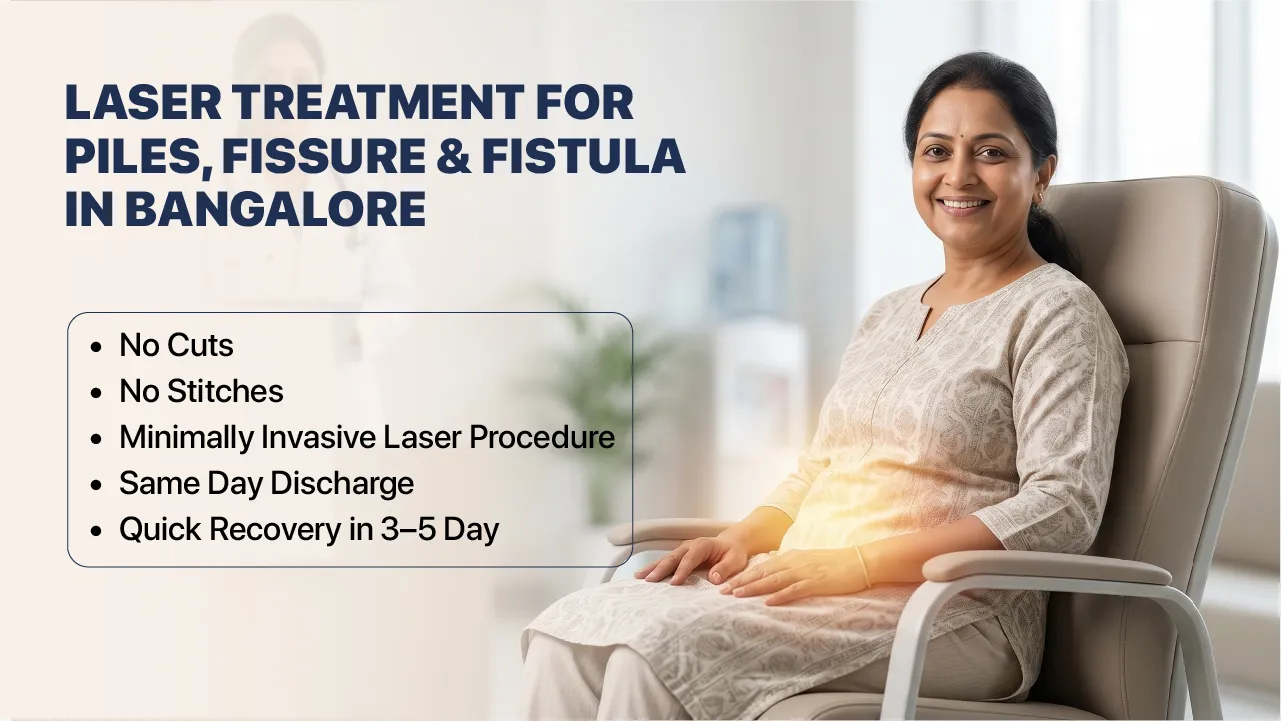
Anorectal conditions are among the most common reasons people visit a surgeon, and among the least talked about. Piles, fissures, and fistulas cause real, daily discomfort, yet most people spend months managing symptoms at home before seeking help. Part of that reluctance comes from embarrassment, and part of it comes from fear of painful surgery and a long recovery. What many people do not know is that laser piles treatment in Bangalore and related procedures have changed the treatment picture considerably. Less pain, no hospital admission, and a return to normal routine within days are now realistic expectations for most patients.
What Are Piles, Fissures, and Fistulas and How Are They Different?
These three conditions are often grouped together because they all affect the same region, but they are distinct problems with different causes and different treatment approaches.
Piles (Haemorrhoids)
Piles are swollen and inflamed blood vessels inside or around the rectum and anus. Internal piles develop inside the rectum and are graded from one to four based on severity. External piles form under the skin around the anal opening and are more likely to cause pain and itching. Straining during bowel movements, chronic constipation, prolonged sitting, and a low fibre diet are the most common contributing factors.
Anal Fissure
A fissure is a small tear in the lining of the anal canal. It typically causes sharp pain during and after a bowel movement, often described as passing glass. There may also be a small amount of bright red blood on the tissue or in the toilet. Most fissures develop from passing hard stools, but chronic fissures can develop a cycle of spasm and poor healing that makes them difficult to resolve without medical help.
Anal Fistula
A fistula is an abnormal passage that develops between the inner part of the anal canal and the skin surrounding the anus. It normally occurs due to an anal abscess that failed to heal. The tunnel traps bacteria and causes recurring discharge, pain, and sometimes fever. Fistulas do not resolve on their own and always require surgical treatment.
What Laser Treatment Options Are Available for Each Condition?
Laser proctology treatment in Bangalore covers all three conditions using different laser based techniques tailored to the specific anatomy and severity of each case.
Laser Treatment for Piles
The procedure most commonly used is called laser haemorrhoidoplasty. A laser probe is inserted into the pile mass and delivers precise energy that shrinks the tissue from within. The blood supply to the pile is effectively reduced, causing it to shrink and retract over the following weeks. There are no cuts, no stitches, and no open wounds. The procedure takes around 20 to 30 minutes under local or short general anaesthesia and most patients go home the same day.
Laser Treatment for Fissures
Fissure treatment without surgery in Bangalore involves the use of laser energy on the inner anal sphincter without surgery. This minimises the spasm that inhibits the healing of the fissure and facilitates the healing of the tissue. It is much less invasive than a lateral internal sphincterotomy, which is the traditional surgical procedure, and has a significantly reduced risk of incontinence.
Laser Treatment for Fistulas
Fistula laser surgery in Bangalore uses a technique called FiLaC, which stands for fistula tract laser closure. A radial emitting laser probe is passed through the fistula tract and delivers energy along its length. The tract is destroyed from within and collapses. The sphincter muscle is not cut, which is the major advantage over conventional fistula surgery, where cutting the muscle carries a risk of incontinence.
How Does Laser Treatment Compare to Conventional Surgery?
When treatment choices affect comfort, recovery, and long-term function, understanding the real difference between laser and conventional surgery becomes essential. Here’s how they differ:
| Factor | Laser Treatment | Conventional Surgery |
|---|---|---|
| Anaesthesia | Local or short general | Spinal or general |
| Hospital Admission | Day procedure | 1 to 3 days |
| Pain After Procedure | Mild | Moderate to significant |
| Recovery Time | 2 to 5 days | 2 to 6 weeks |
| Risk of Incontinence | Very low | Higher, especially for fistulas |
| Return to Work | Within a week for most patients | 2 to 4 weeks |
| Wound Care | Minimal | Dressings and regular wound management |
| Recurrence Rate | Low with proper case selection | Variable |
The difference is most significant for fistula cases, where conventional surgery has historically carried meaningful risks to sphincter function. Laser closure preserves the sphincter completely.
When Is Laser Treatment the Right Choice and When Is It Not?
Laser treatment works well for most grade one to three piles, acute and chronic fissures, and low to medium complexity fistulas. There are situations where conventional surgery remains the more appropriate option:
- Very large or grade four prolapsed piles that have significant external components.
- Complex, high fistulas with multiple tracts where the anatomy requires direct surgical access.
- Fistulas associated with Crohn's disease, which need a different overall management approach.
- Cases where there has been a previous failed laser or surgical procedure and the anatomy is significantly altered.
A Piles fissure fistula specialist in Bangalore will assess the grade and complexity of the condition before recommending any approach. The recommendation should always be based on what the individual case requires, not on what is most convenient to perform.
What Should You Expect on the Day of the Procedure?
Most laser proctology procedures follow a straightforward day care pathway:
- You arrive fasting, typically from the previous night.
- A brief pre procedure assessment is done, including blood pressure and a review of medications.
- The procedure is performed under local anaesthesia or short general anaesthesia, depending on the complexity.
- Total time in the facility is usually 3 to 4 hours, including preparation and recovery.
- You are discharged the same day with a prescription, dietary advice, and a follow up appointment.
Post procedure, most patients experience mild soreness for a day or two. A high fibre diet, adequate hydration, and warm water sitz baths are the standard recovery recommendations. Most people return to desk work within 3 to 5 days.
What to Look for in a Specialist for These Conditions?
The best piles doctor in Bangalore for laser proctology procedures is one with specific training in anorectal surgery and hands on experience with laser techniques.
- A thorough anorectal examination before any treatment recommendation.
- Use of proctoscopy or anoscopy to accurately grade the condition.
- A clear explanation of all available options, including non surgical ones where relevant.
- Honest communication about what laser treatment can and cannot achieve for your specific grade and type of condition.
Do not proceed with any procedure without a proper clinical examination. An accurate diagnosis is what makes the treatment plan appropriate.
Tired of Managing Piles, Fissure or Fistula? Apollo Spectra Can Help!
Piles, fissures, and fistulas are not conditions you have to keep living with. At Apollo Spectra Bangalore, the laser proctology treatment in Bangalore team handles these conditions with a structured, evidence based approach that prioritises your comfort and recovery. Every patient goes through a proper evaluation before any treatment is recommended. The procedures are day care, the recovery is short, and the care continues through follow up until you are fully settled. Book your consultation with Apollo Spectra today.
Recent Blogs

Get Expert Health Advice
Related Blogs

NOTICE BOARD
CONTACT US
FOR PARTNERSHIP
CONTACT US
FOR PARTNERSHIP
.svg)
.svg)
.svg)
.svg)


 Book Appointment


Need Help?
Request a Callback
Have questions about your treatment or consultation? Our experts are here to help.