

Understanding Skin Infections: Types, Causes, Symptoms, Prevention, and Treatment
October 5, 2023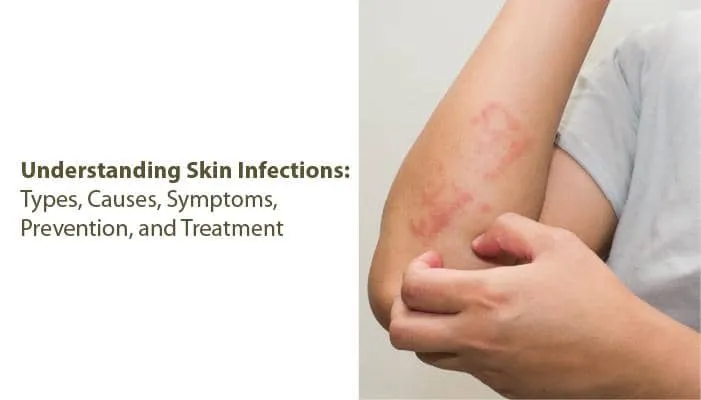
Table of Contents
Introduction:
Skin infections as common conditions caused by various microorganisms, such as bacteria, fungi, viruses, or parasites.
Explore different types of skin infections, their causes, symptoms, prevention measures, and available treatments.
Types of Skin Infections:
- Bacterial Skin Infections: Bacterial skin infections are cellulitis, impetigo, and folliculitis.
- Fungal Skin Infections: Fungal infections are ringworm, athlete's foot, and candidiasis.
- Viral Skin Infections: Some viral infections including herpes, shingles, and warts.
- Parasitic Skin Infections: Conditions caused by parasites, such as scabies and lice.
Causes of Skin Infections:
- Skin infections can be caused by various factors, including exposure to pathogens, cuts or wounds, weakened immune system, and poor hygiene.
Symptoms of Skin Infections:
- Common symptoms of skin infections, such as redness, itching, pain, swelling, blisters, rash, and in some cases, fever.
Prevention of Skin Infections:
- Hand Hygiene: Frequent handwashing to prevent the spread of infections.
- Cleanliness: Maintaining clean skin and clothing, especially in humid or crowded environments.
- Avoiding Sharing: Its good to avoid sharing personal items like towels, razors, or clothing.
- Vaccination: Vaccines available for certain viral infections like chickenpox (varicella) and shingles (herpes zoster).
- Proper Wound Care: Cleaning and covering wounds to prevent bacterial infections.
Treatment of Skin Infections:
Treatment options, which may include:
- Antibiotics: For bacterial infections.
- Antifungal Medications: For fungal infections.
- Antiviral Medications: For viral infections.
- Topical Creams: For localized infections.
- Oral Medications: For severe or systemic infections.
When to Seek Medical Attention:
Its important to consult a healthcare professional or dermatologist if:
- Infections are severe, spreading rapidly, or accompanied by a high fever.
- Over-the-counter treatments are ineffective.
- There is uncertainty about the diagnosis.
Conclusion:
- Its important to focus on hygiene, prompt treatment, and seeking medical advice when needed.
- Prioritize skin health and consult healthcare professionals for accurate diagnosis and management of skin infections.
Recent Blogs



Get Expert Health Advice
Related Blogs



NOTICE BOARD
CONTACT US
FOR PARTNERSHIP
CONTACT US
FOR PARTNERSHIP
.svg)
.svg)
.svg)
.svg)


 Book Appointment


Need Help?
Request a Callback
Have questions about your treatment or consultation? Our experts are here to help.