

Inguinal Hernia: Types, Symptoms, Causes, Treatment and Prevention
October 9, 2026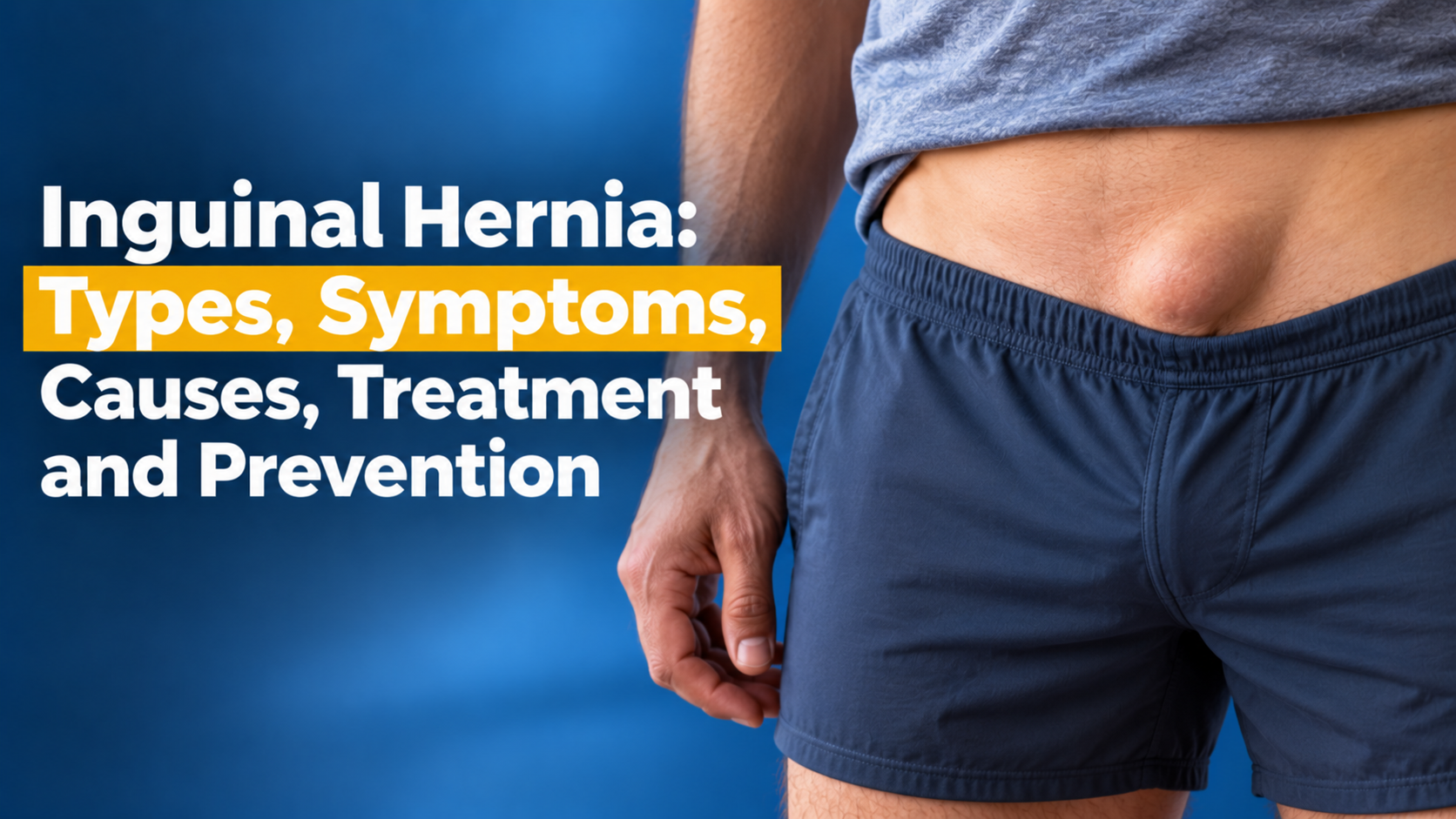
A small bulge in the groin may be easy to overlook, especially if it disappears when you lie down. But if it becomes more noticeable when you cough, lift something heavy or strain, it could be an inguinal hernia. If you’re experiencing these symptoms or have been diagnosed with an inguinal hernia, this article is here to help. Keep reading as we explore the condition in detail, including its causes, symptoms, and treatment options.
What is an Inguinal Hernia?
An inguinal hernia occurs when a portion of the intestine or other tissue pushes through a weakened area in the abdominal wall, usually in the groin region. It may appear as a visible or palpable bulge that becomes more noticeable when you cough, bend, lift something heavy, or strain.
The condition develops when the tissues inside the abdomen push through a weak spot in the inguinal canal, a passage in the lower abdominal wall. While an inguinal hernia is not always painful, it can cause discomfort, pressure, or a dragging sensation in the groin. In some cases, the hernia can become trapped or strangulated, which requires urgent medical attention.
Types Of Inguinal Hernia
Inguinal hernias are generally classified into two main types based on where the hernia develops in relation to the inguinal canal. These include:
Indirect Hernia
An indirect inguinal hernia occurs when abdominal tissue enters the inguinal canal through the deep inguinal ring, following the pathway taken by the testicles during development. It is usually related to a weakness that is present from birth, although it may not become noticeable until later in life.
Direct Hernia
A direct inguinal hernia develops when abdominal tissue pushes through a weakened area in the posterior wall of the inguinal canal. It is more commonly associated with weakening of the abdominal muscles over time and is therefore often seen in older adults.
What Causes Inguinal Hernia?
An inguinal hernia develops when tissue, such as part of the intestine, pushes through a weak spot in the muscles of the lower abdominal wall. This can happen because several reasons including:
Abdominal Weakness
A naturally weak area in the abdominal wall can allow tissue to push through the muscles. In some people, this weakness is present from birth, while in others, it develops gradually with age.
Heavy Lifting
Repeatedly lifting heavy objects or putting excessive strain on the abdominal muscles can increase pressure within the abdomen and contribute to hernia formation, particularly when the abdominal wall is already weak.
Chronic Cough
Persistent coughing repeatedly increases pressure inside the abdomen. Over time, this may place additional stress on weakened areas of the abdominal wall.
Constipation
Straining during bowel movements can increase intra-abdominal pressure. Frequent or prolonged straining may contribute to the development or worsening of an inguinal hernia.
Pregnancy
Pregnancy places additional pressure on the abdominal wall as the uterus grows. Hormonal changes can also affect the strength and elasticity of connective tissues, potentially increasing the risk of hernia.
Excess Weight
Being overweight or obese can place additional pressure on the abdominal wall. This may increase the likelihood of a hernia developing, particularly when other risk factors are present.
What are the Symptoms of Inguinal Hernia?
An inguinal hernia may not always cause noticeable symptoms, particularly when it is small. However, as it develops or becomes more pronounced, one may experience symptoms such as:
- Groin Bulge: A visible or palpable lump in the groin that may become more noticeable when standing, coughing, bending, or straining.
- Groin Discomfort: An aching, dragging, or heavy sensation in the groin, especially after prolonged standing or physical activity.
- Pain Or Burning: Pain, burning, or soreness around the site of the hernia, which may worsen with movement or exertion.
- Scrotal Swelling: In men, the hernia may extend into the scrotum, causing swelling or discomfort in the area.
- Pain While Straining: Discomfort that becomes more noticeable while coughing, sneezing, lifting heavy objects, or having a bowel movement.
Treatment Options for Inguinal Hernia
The doctor may recommend monitoring in some cases, while symptomatic or complicated hernias may require surgical repair. Common treatment options include:
Watchful Waiting
If the hernia is small and does not cause significant symptoms, your doctor may recommend monitoring it rather than treating it immediately. Regular follow-ups can help assess whether the hernia is changing or symptoms are developing.
Open Hernia Repair
During open surgery, the surgeon makes an incision in the groin, moves the protruding tissue back into the abdomen, and repairs the weakened area. Surgical mesh may be used to reinforce the abdominal wall and reduce the risk of recurrence.
Laparoscopic Hernia Repair
Laparoscopic hernia repair involves making small incisions through which a camera and specialised surgical instruments are inserted. The hernia is repaired from inside the abdominal wall, usually with mesh. This approach may allow smaller incisions and a quicker recovery for some patients.
Robot-Assisted Surgery
Robotic-assisted surgery uses specialised instruments controlled by the surgeon through a robotic system. Similar to laparoscopic repair, it involves small incisions and allows the surgeon to repair the weakened area from inside the abdomen.
Emergency Surgery
If an inguinal hernia becomes incarcerated or strangulated, emergency surgery may be required. This is particularly important when the blood supply to the trapped tissue is compromised, as delayed treatment can lead to serious complications.
How Can Inguinal Hernia be Prevented?
While some inguinal hernias cannot be prevented, certain lifestyle and health measures may help reduce the risk. These include:
- Maintain a Healthy Weight: Maintaining a healthy body weight can reduce excess pressure on the abdominal wall.
- Use Proper Lifting Techniques: Lift heavy objects using your legs rather than putting excessive strain on your abdominal muscles. Avoid lifting more than you can safely manage.
- Prevent Constipation: Include enough fibre and fluids in your diet to reduce straining during bowel movements.
- Treat Persistent Cough: Managing a chronic cough can help reduce repeated increases in abdominal pressure.
- Avoid Smoking: Smoking can contribute to persistent coughing and may affect tissue health, potentially increasing the risk of hernia.
- Exercise Regularly: Regular physical activity can help maintain healthy body weight and overall muscle strength. However, avoid exercises that cause pain or excessive strain.
When is an Inguinal Hernia Considered an Emergency?
An inguinal hernia requires urgent medical attention when the protruding tissue becomes trapped and cannot be pushed back into the abdomen, or when its blood supply is cut off. Watch for the following warning signs:
- Sudden Severe Pain: Intense or rapidly worsening pain in the groin or abdomen.
- Firm Bulge: The hernia becomes hard, tender, or noticeably swollen.
- Irreducible Bulge: The bulge cannot be pushed back into the abdomen when it could previously be reduced.
- Skin Changes: The skin over the hernia becomes red, purple, dark, or unusually warm.
- Nausea Or Vomiting: These symptoms may occur if the hernia causes bowel obstruction.
- Abdominal Distension: Swelling or bloating of the abdomen can indicate an obstruction.
- Difficulty Passing Stool Or Gas: This can be a sign that part of the intestine is trapped.
Consult at Apollo Spectra For Inguinal Hernia Care
Whether you’re experiencing symptoms that make you suspect an inguinal hernia or have already been diagnosed with one, getting the right medical advice can help you understand what comes next. At Apollo Spectra, you can have your condition evaluated, and discuss the most appropriate way forward based on your individual needs. Book an appointment with a specialist at Apollo Spectra today and get personalised guidance as per your concerns.
Recent Blogs
Get Expert Health Advice
Related Blogs
NOTICE BOARD
CONTACT US
FOR PARTNERSHIP
CONTACT US
FOR PARTNERSHIP
.svg)
.svg)
.svg)
.svg)


 Book Appointment


Need Help?
Request a Callback
Have questions about your treatment or consultation? Our experts are here to help.