

Gallstones: Causes, Symptoms, Diagnosis, and Treatment
October 21, 2024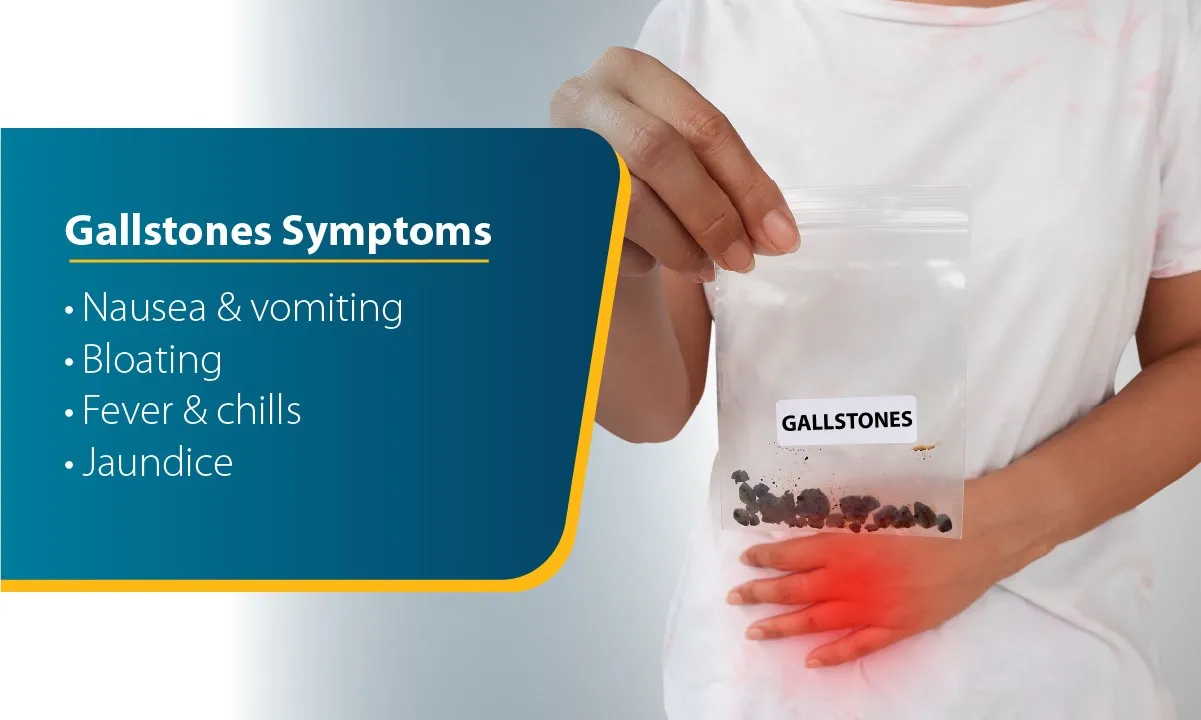
The food we eat contains different substances like fat, carbohydrates, proteins, etc. Specific juices function to break down the substances into smaller molecules. Similarly, the breakdown of fat in our food is primarily the duty of bile, which is secreted by the liver. However, the secreted bile is not completely used up at that instant. It is instead stored in the gallbladder and secreted based on the body’s needs.
Gallstones are hardened deposits that form inside the gallbladder. These stones can range in size from a grain of sand to a golf ball. While some people with gallstones don't experience any symptoms, others can have excruciating pain, nausea, and other unpleasant symptoms.
In this blog, we will learn about gallstones, their causes, symptoms, diagnosis, treatment options, and preventive measures.
Understanding Gallstones
The term cholelithiasis breaks into chole, which means bile, and lithiasis, which means stone forming. When there is an imbalance in the substances that make up bile (cholesterol, bile salts, and bilirubin), the excess cholesterol or bilirubin can form solid particles, which eventually become gallstones.
The issue with gallstones is that they get bigger over time. It happens slowly, but gallstones keep expanding as bile repeatedly flows over them, leaving behind more sediment layers. What starts as a tiny grain can grow large enough to block the flow of bile, especially if the gallstone gets stuck in a narrow area like a bile duct or the neck of the gallbladder. Initially small, gallstones can increase in size until they cause an obstruction.
There are two main types of gallstones:
- Cholesterol Stones: These are the most common type of gallstones, consisting primarily of hardened cholesterol.
- Pigment Stones: These stones are made up of bilirubin, a waste product from the breakdown of red blood cells.
Causes and Risk Factors
Gallstones usually form when bile doesn't get emptied properly from the gallbladder. When bile stays in the gallbladder for too long instead of draining out, it can turn into a thick sludge, which can then develop into gallstones over time. This is one of the leading causes of gallstones.
Things that block the flow of bile, like strictures (narrowing) in the bile duct or tumors, can also lead to gallstones forming.
Cholestasis or gallbladder stasis can contribute to gallstone formation. "Stasis" means lack of movement or inactivity. If your bile ducts or gallbladder are not effectively moving bile through the biliary tract (the system of ducts that carry bile), the bile is more likely to form solid sediment. This can happen if there is a problem with the muscular contractions that normally propel bile or with the chemical signals that tell these muscles when to contract.
Risk Factors
The common risk factors of gallstones are as follows:
- Obesity: Being overweight or obese is a significant risk factor for gallstones, as it affects the way the body metabolizes cholesterol and bile salts.
- Rapid Weight Loss: Rapid or extreme weight loss can lead to an excess of cholesterol in the bile, increasing the risk of gallstone formation.
- Gender: Women are twice as likely to develop gallstones compared to men, possibly due to the effects of estrogen on bile composition.
- Age: The risk of gallstones increases with age, especially after the age of 40.
- Family History: Having a close relative with gallstones increases your risk.
- Pregnancy: Hormone changes during pregnancy can increase the risk of gallstones.
- Diet: A diet high in cholesterol and fat can contribute to the formation of gallstones.
- Certain Medical Conditions: Diseases like Crohn's disease, cirrhosis, and diabetes can increase the risk of gallstones.
Symptoms and Signs
Many people with gallstones don't experience any symptoms, a condition known as "silent stones." However, when gallstones symptoms do occur, they can include:
- Severe pain in the upper right abdomen, often radiating to the back or right shoulder.
- Nausea and vomiting.
- Indigestion, bloating, and gas.
- Fever and chills (if the gallstone causes an infection).
- Jaundice (yellowing of the skin and eyes).
Gallstones pain can last several hours or even days. It is often triggered by fatty or greasy foods, as these foods cause the gallbladder to contract and try to release bile, which can be obstructed by the stones.
Diagnosis and Evaluation
If you experience symptoms that suggest gallstones, your doctor may order one or more of the following tests:
- Ultrasound: This is the most common diagnostic test for gallstones. An ultrasound uses sound waves to create images of the gallbladder and any stones present.
- CT Scan: A CT scan can provide detailed images of the gallbladder and surrounding organs, helping to identify gallstones and any complications.
- Blood Tests: Your doctor may order blood tests to check for signs of infection or inflammation, as well as to measure liver function.
- HIDA Scan: This nuclear medicine test can help determine if the gallbladder is functioning properly and if there is a blockage in the bile ducts.
Treatment Options
The treatment for gallstones depends on the severity of your symptoms and the presence of any complications.
Conservative Management
If you have mild or infrequent symptoms, your doctor may recommend conservative management, which includes:
- Dietary Changes: Avoiding fatty or greasy foods can help prevent gallbladder attacks.
- Pain Medications: Over-the-counter pain relievers like acetaminophen or ibuprofen can help manage the pain during an attack.
- Gallstone Dissolution Therapy: In some cases, medications can be prescribed to dissolve cholesterol stones over several months. However, not all individuals are suitable candidates.
- ERCP: Endoscopic retrograde cholangiopancreatography (ERCP) is a procedure where a thin, flexible tube with a camera is passed down your throat. X-rays are used to help guide the tube and remove any gallstones stuck in the bile duct that connects the gallbladder to the intestines.
Surgical Procedures
If you have frequent or severe symptoms, or if complications arise, your doctor may recommend surgical removal of the gallbladder, a procedure called a cholecystectomy. This can be done through:
- Open Cholecystectomy: In this traditional approach, the surgeon makes a large incision in the abdomen to remove the gallbladder.
- Laparoscopic Cholecystectomy: This minimally invasive procedure involves making several small incisions in the abdomen and using a tiny camera and surgical instruments to remove the gallbladder.
Laparoscopic cholecystectomy is the most common approach, as it offers a faster recovery time and smaller scars compared to the open procedure.
Post-Treatment Care
After a cholecystectomy, you may experience some temporary digestive issues, such as diarrhea or gas, as your body adjusts to the absence of the gallbladder. Your doctor may recommend dietary changes, such as avoiding fatty or greasy foods, to help manage these symptoms.
In most cases, people can live a healthy life without a gallbladder, as the liver can still produce bile to aid in digestion. However, some individuals may experience more frequent bowel movements or have difficulty digesting certain foods.
Final Thoughts
Gallstones can be painful and uncomfortable, but with proper diagnosis and treatment, most people can find relief and manage their symptoms effectively. If you experience any signs or symptoms of gallstones, it's important to consult with your doctor for an appropriate treatment plan.
Apollo Spectra could be a great choice for getting a quick consultation. Our compassionate care and cutting-edge facilities redefine healthcare excellence. Entrust your well-being to our dedicated professionals, where your comfort is our utmost priority.
Recent Blogs
Get Expert Health Advice
Related Blogs
NOTICE BOARD
CONTACT US
FOR PARTNERSHIP
CONTACT US
FOR PARTNERSHIP
.svg)
.svg)
.svg)
.svg)


 Book Appointment


Need Help?
Request a Callback
Have questions about your treatment or consultation? Our experts are here to help.