

Bladder Stones: Symptoms, Causes, Treatment, and Prevention
October 5, 2026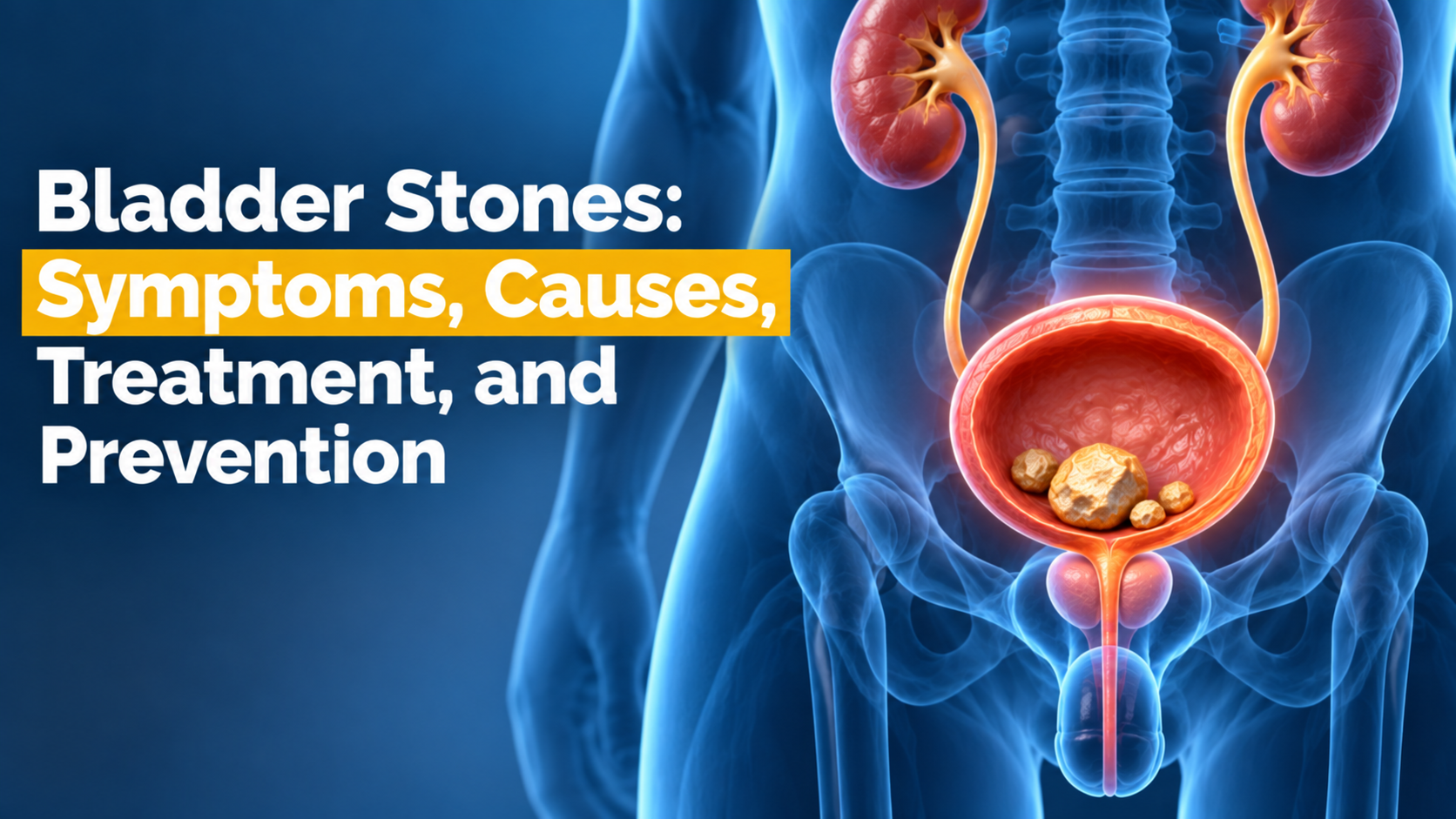
Pain in the lower abdomen, an intermittent urine stream or a frequent urge to urinate can make everyday life uncomfortable. Although these symptoms can have several possible causes, bladder stones are one of the possibilities. Bladder stones form when minerals in urine crystallise and harden inside the bladder, often because it does not empty completely. Small stones may cause no symptoms, but larger ones can irritate the bladder or interfere with the flow of urine. The good news is that bladder stones are usually very treatable once they’re diagnosed. This article looks at what causes bladder stones, the symptoms to watch out for, how they’re diagnosed and treated, and what you can do to help prevent them.
What are Bladder Stones?
Bladder stones are hard, solid deposits that form inside the bladder when minerals and other substances in concentrated urine crystallise and gradually clump together. They most commonly develop when the bladder cannot empty completely, although other urinary conditions can also contribute to their formation. Small stones may pass out of the body while urinating without causing major problems, while larger ones can irritate the bladder or interfere with the normal flow of urine.
Bladder stones are different from kidney stones, although a kidney stone that travels down the urinary tract can eventually reach the bladder. Not everyone with a bladder stone will experience symptoms, particularly if the stone is small.
Symptoms Of Bladder Stones
Some people may have bladder stones without noticing any symptoms. When symptoms do appear, they are usually related to irritation of the bladder or difficulty passing urine. Common bladder stone symptoms include:
- Painful Urination: You may experience a burning sensation or pain while passing urine. This can sometimes be mistaken for a urinary tract infection.
- Frequent Urination: You may feel the need to urinate more often than usual, including waking up several times at night to use the bathroom.
- Lower Abdominal Pain: Bladder stones can cause discomfort or pain in the lower abdomen. The intensity can vary depending on the size and position of the stone.
- Difficulty Urinating: A stone can interfere with the opening of the bladder, making it harder to start urinating or maintain a normal urine flow.
- Interrupted Flow: Your urine stream may stop and start unexpectedly, particularly if the stone temporarily blocks the bladder outlet.
- Blood In Urine: Irritation caused by a stone can sometimes lead to blood in the urine. The urine may look pink, red, or darker than usual.
- Repeated UTIs: Bladder stones can be associated with recurring urinary tract infections. If you keep developing UTIs, your doctor may recommend further tests to identify an underlying cause.
These symptoms can also occur with several other urinary conditions. So, experiencing them does not automatically mean you have bladder stones.
What Causes Bladder Stones?
Bladder stones usually develop when urine remains in the bladder instead of being completely emptied. As the urine becomes concentrated, minerals can collect and form crystals, which may gradually grow into stones. Several conditions can interfere with normal bladder emptying, including:
- Enlarged Prostate: In men, an enlarged prostate can press on the urethra and make it difficult for urine to leave the bladder completely. The remaining urine can then contribute to stone formation.
- Nerve Problems: Conditions or injuries that affect the nerves controlling the bladder can interfere with normal urination. This is sometimes referred to as a neurogenic bladder.
- Bladder Diverticula: Some people develop small pouches in the bladder wall. Urine can collect in these pockets instead of being completely emptied, increasing the chance of stone formation.
- Bladder Prolapse: In women, weakening of the tissues supporting the bladder can cause it to drop towards the vagina. This may interfere with complete bladder emptying.
- Urinary Blockage: A narrowing or blockage in the urinary tract can prevent urine from flowing normally and cause some urine to remain in the bladder.
- Constipation: Severe or persistent constipation can put pressure on the bladder and affect normal bladder emptying.
In some cases, bladder stones can also form around a foreign object in the bladder, such as a urinary catheter.
How are Bladder Stones Diagnosed?
Since symptoms such as painful urination, frequent urination and blood in the urine can have several causes, your doctor may use a combination of tests to confirm whether bladder stones are present.
Medical History
Your doctor may first ask about your symptoms, how long you have had them, your urination habits and whether you have experienced urinary infections or difficulty emptying your bladder. Your medical history can also help identify conditions that may increase your risk of bladder stones.
Urine Test
A urine sample can be checked for blood, signs of infection and other abnormalities. This can help identify a urinary tract infection or other conditions that may be causing similar symptoms.
Blood Test
Blood tests may be recommended to check for signs of infection and assess general health. Depending on your symptoms and medical history, your doctor may also look at kidney function or other factors that could be relevant to your condition.
Ultrasound
An ultrasound uses sound waves to create images of the bladder and urinary tract. It can help identify bladder stones and may also show whether there is urine remaining in the bladder after urination. It is painless and does not use radiation.
CT Scan
A CT scan provides more detailed images of the urinary tract and can help identify stones, their location and possible blockages. Your doctor may recommend it when additional information is needed after an initial assessment.
Cystoscopy
A cystoscopy allows the doctor to look directly inside the bladder. A thin instrument with a small camera is passed through the urethra and into the bladder, where the doctor can check for stones and other abnormalities. In some cases, the same procedure can also be used to remove a bladder stone.
How are Bladder Stones Treated?
Treatment depends on factors such as the size and location of the stone, the symptoms it is causing, and the reason it developed. Bladder stones treatment options include:
Passing Small Stones
Very small bladder stones may sometimes leave the body naturally during urination. Your doctor may recommend adequate fluid intake where appropriate, particularly if the stone is small and there is no significant obstruction.
Cystolitholapaxy
Cystolitholapaxy is a commonly used procedure for removing bladder stones. A cystoscope is passed through the urethra into the bladder, allowing the doctor to locate the stone. Larger stones can then be broken into smaller pieces using a suitable device, sound waves, or a laser before the fragments are removed.
Surgical Removal
In some cases, particularly when a stone is too large or cannot be removed using a cystoscopic procedure, surgery may be recommended. The appropriate approach depends on the individual case and the stone's characteristics.
Treating The Cause
Removing the stone is only part of treatment. If an enlarged prostate, urinary obstruction, nerve-related bladder problem, or another condition is preventing the bladder from emptying properly, that underlying issue may also need treatment to reduce the risk of the stones returning.
Can Bladder Stones be Prevented?
There is no single way to prevent every bladder stone, particularly when an underlying condition affects how the bladder functions. However, certain habits and appropriate treatment can help reduce the risk, especially if you have had bladder stones before. Some useful measures include:
- Stay Hydrated: Drinking enough fluids helps keep urine diluted and can support the normal flushing of substances through the urinary tract. The amount of fluid you need depends on your health, activity level and other medical conditions.
- Empty Bladder Fully: Give yourself enough time to urinate rather than rushing. If you regularly feel that your bladder has not emptied, speak to a doctor to find out why.
- Don't Hold Urine: Try not to regularly delay urination when you feel the need to go. If you still feel the urge after urinating, your doctor may suggest trying again after a short interval.
- Treat Underlying Issues: Conditions that interfere with bladder emptying, such as an enlarged prostate or urinary blockage, should be properly evaluated and managed.
- Attend Follow-Ups: If you have previously had bladder stones, follow-up appointments can help identify factors that may increase the chance of recurrence and ensure that underlying conditions are being managed.
Get Your Symptoms Assessed at Apollo Spectra
Bladder stones are treatable, but recognising the symptoms early can make it easier to get the right care. If you notice pain while urinating, difficulty passing urine, blood in your urine, or a feeling that your bladder isn't emptying properly, don't ignore it, especially if the symptoms keep coming back. If you have any concerning urinary symptoms, consult a urologist at Apollo Spectra. They can assess your symptoms and guide you towards the right treatment.
Recent Blogs


Get Expert Health Advice
Related Blogs
NOTICE BOARD
CONTACT US
FOR PARTNERSHIP
CONTACT US
FOR PARTNERSHIP
.svg)
.svg)
.svg)
.svg)


 Book Appointment


Need Help?
Request a Callback
Have questions about your treatment or consultation? Our experts are here to help.