

10 Precautions to Be Taken After Fistula Surgery
June 30, 2026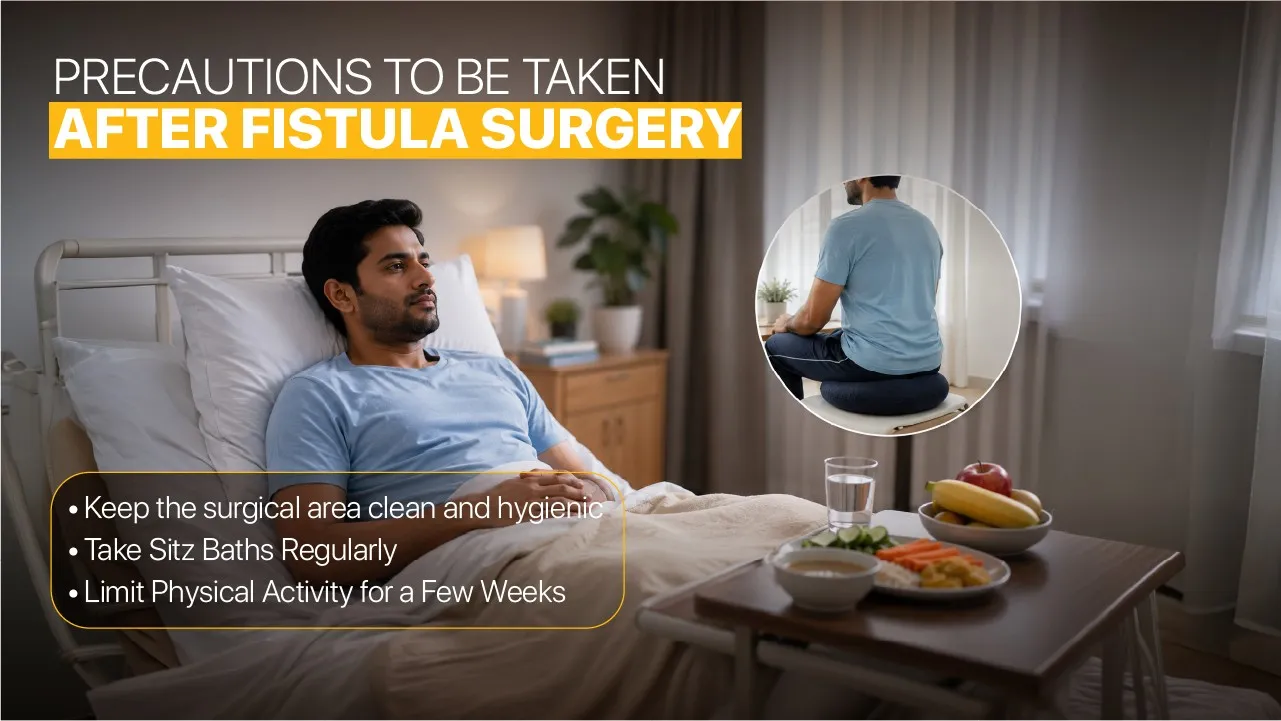
The surgery is done. The fistula is gone. And now you are home, slightly sore, wondering what you can and cannot do for the next few weeks. Fistulotomy aftercare instructions are where most recoveries go right or wrong. The procedure itself is straightforward, but the healing that follows needs attention. A fistula wound is left open intentionally so it can heal from the inside out, which means what you do at home during this period directly determines how quickly and cleanly the recovery goes. Continue reading to learn about the 10 precautionary steps that should be taken after a fistula surgery to prevent infection and other medical complications post-surgery.
What Is A Fistula?
A fistula is a common term used for a growth that may be an ulcer or a tunnel-like formation between two organs or an organ and the skin. It causes body fluids or pus to flow into spaces in the body where they should not. A fistula can be caused by infection, inflammation, childbirth, or trauma. Underlying conditions such as diabetes and Crohn's disease may cause a fistula as well. Anal fistula is the most common type.
While the treatment depends on size and location, symptoms such as pain, fever, leakage, infection, and fatigue often require surgery for relief. In mild cases, antibiotics can be prescribed as well.
What Does Fistula Surgery Involve?
A fistula surgery can be of two types, namely Fistulotomy and Fistulectomy.
- Fistulotomy is a procedure where the entire length of the tunnel is cut, and the fluid is drained. This process transforms the tube-like structure into an open, flat wound to heal.
- In Fistulectomy, the entire tube-like tissue called the fistula is removed from the body. Both procedures take around 30-90 minutes to complete and are done under local anaesthesia. Many hospitals and doctors discharge patients the same day.
Top 10 Precautions to Take After Fistula Surgery
The surgery, be it Fistulotomy or Fistulectomy, creates an open wound. While the aftercare routine depends on the location of the surgery, the basics remain the same. Here are the 10 precautions the family and the patient must follow to ensure that the person recovers quickly without any medical complications.
- Maintain Proper Hygiene Around the Surgical Area
One needs to remember that a surgery creates a wound. Keeping the wound dry and clean becomes necessary for it to heal. If you have had an anal fistula surgery, keeping it clean and dry is particularly important, as the area cannot be bandaged completely.
- Follow All Prescribed Fistulotomy Aftercare Instructions
Depending on the location of the surgery, every patient's family is given instructions on aftercare. It includes medicines like antibiotics, painkillers, multivitamins and dietary requirements to promote faster healing. Following the advice of the doctor speeds up the fistula surgery recovery time considerably.
- Take Sitz Baths Regularly
This step is only for anal fistula surgery patients. Since the wound area is sensitive, soaking the bottom in warm water mixed with Epsom salt is recommended to keep the area clean. The general recommendation for a sitz bath is 2-3 sessions, each lasting 15-20 minutes, daily until follow-up. However, follow the doctor’s advice for the frequency, number of times and duration. Ensure that the water temperature is tolerable for the patient.
- Avoid Straining During Bowel Movements
For anal fistula patients, bowel movements can cause strain to the wound. Doctors recommend a daily dose of laxatives after surgery to prevent constipation. Do not try to change the dose and contact the doctor immediately if blood starts to pass with stool. Stronger antibiotics often cause constipation or diarrhoea. While the patient is only released after checking their tolerance to medicines, keeping a watch on the bowel movements is a must even after the follow-up.
- Eat a Balanced and Easy-to-Digest Diet
Keeping bowel movements smooth and easy is necessary after all types of surgery. It is because unintentional pressure may cause bleeding. And this is where you require a healthy diet for nutrition to support healing. So, what to eat after fistula surgery? Avoid spicy, fried, and refined carbohydrates such as bread and maida, along with processed food, to prevent overloading the digestive system. Instead, the diet should include high-fibre foods like oats, cooked vegetables, soft fruits like papaya, and lean proteins to support digestion and easy bowel movements.
- Limit Physical Activity for a Few Weeks
A patient is required to rest for 4 weeks. While light walking is encouraged, weight lifting, sitting for long hours, and driving should be avoided until the doctor deems the patient fit. In general, recovery in fistula surgery takes 5-6 weeks, given that the aftercare is done properly.
- Change Dressings as Advised
The hospital provides training before discharge on how to change a dressing for an anal fistula. In other cases, the wound may not need redressing. The dressing may be a requirement only in the case of anal fistula surgery. At other locations, a final dressing is done, which the doctor removes during the follow-up. For anal fistula surgery, dressings need to be changed twice every day- morning and evening.
Also Read: Home Remedies for Fistula Cure
- Fistula Surgery Complications to Avoid
Infection is a common postoperative risk, and thus taking precautions is extremely important. Thus, you must monitor temperature, signs of discharge or bleeding when changing the dressing, and swelling at the site or nearby area.
- Stay Hydrated and Prevent Constipation
Drinking 3-4 litres of water every day is crucial. Patients may often avoid drinking water when on bed rest to reduce the need to use the toilet. This increases the risk of dehydration, which may cause fatigue and delay recovery. Also, fluid is necessary for keeping the stool soft. Thus, dehydration may cause constipation, which in turn may cause internal bleeding.
- Attend All Follow-Up Consultations
Post-surgery follow-ups are important to track the healing progress. A general follow-up is required after 15 days of surgery. Based on the progress, the doctor may request another follow-up in a month or, depending on the cause of the fistula, another visit in a year. A yearly checkup may be necessary for patients undergoing fistula surgery to check for and detect the recurrence of fistula early.
Consult Fistula Specialists at Apollo Spectra Today!
A fistula surgery is not a major procedure, and if you are wondering how long does it take to heal after a fistula operation, the answer is almost 4 to 6 weeks. Proper wound care and precautions, such as keeping the wound clean and dry and ensuring no constipation, play an important role in faster recovery. While there is nothing to fear about, negligence can lead to infection and recurrence of the fistula. Consulting an expert in treating fistula at Apollo Spectra Hospitals can not only prevent medical complications but also prevent further development of these problematic tissues.
Recent Blogs
Get Expert Health Advice
Related Blogs

NOTICE BOARD
CONTACT US
FOR PARTNERSHIP
CONTACT US
FOR PARTNERSHIP
.svg)
.svg)
.svg)
.svg)


 Book Appointment


Need Help?
Request a Callback
Have questions about your treatment or consultation? Our experts are here to help.