

What are the types of Fibroids and their treatment?
May 21, 2019
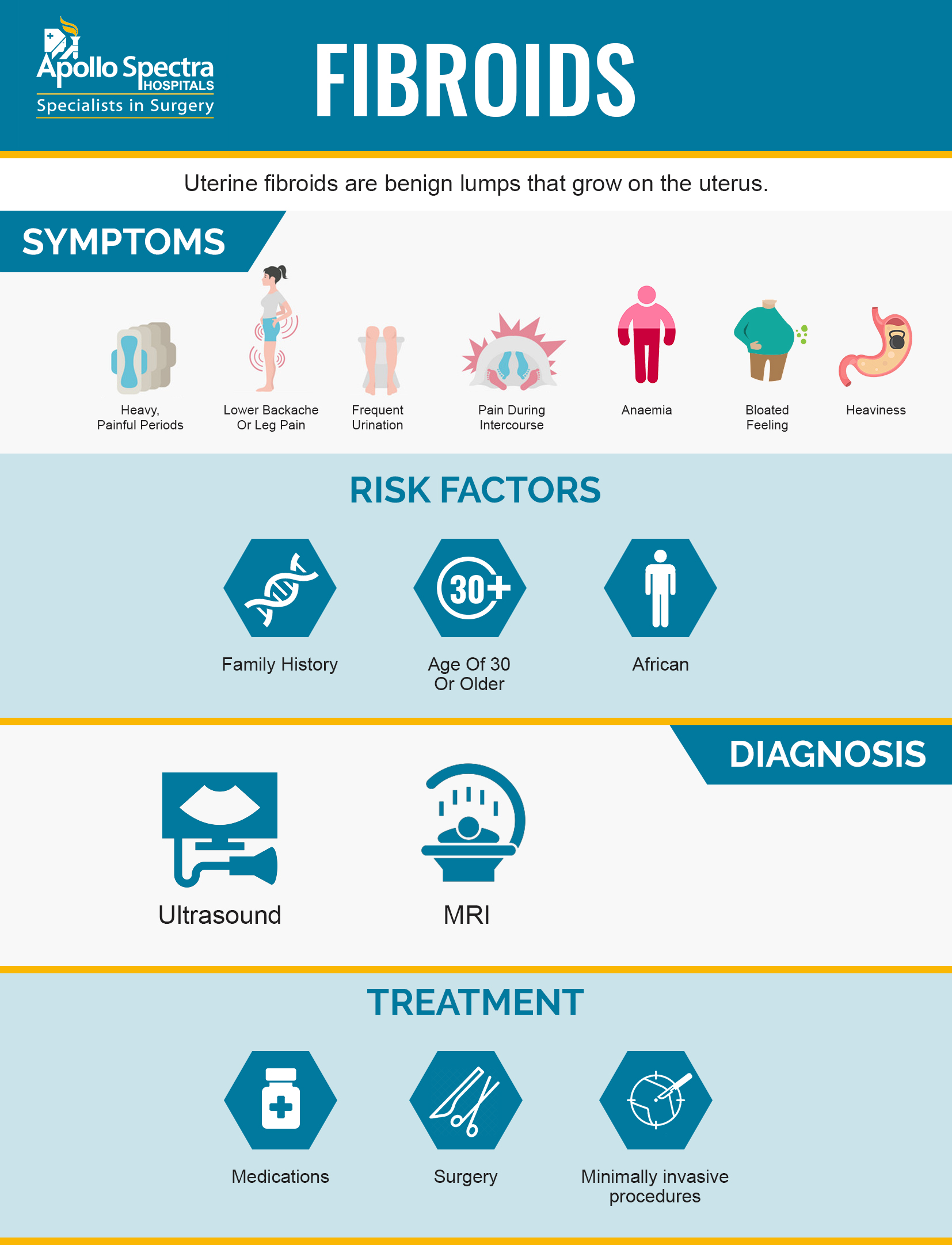
Benign tumors made of fibrous connective tissue and smooth muscle cells are known as Fibroids. These are not cancer and they do not have the potential to become cancer. Many women experience no symptoms of fibroids and require no treatment. Fibroids have a wide range of sizes ranging from something as small as a pea to something as large as a watermelon.
Fibroids Types
Depending on its location in the womb, fibroids can be classified into 4 types:
- Intramural
Embedded in the muscular wall of the womb, this is the most common type of Fibroid.
- Subserosal
This type of fibroid extends beyond the walls of the womb and starts growing within the surrounding layer of the outer uterine tissue. If left untreated, they can develop into Pedunculated fibroid, where the fibroid becomes quite large and has a stalk.
- Submucosal
This type of fibroid develops into the cavity of the womb. It can be found under the inner lining of the wall.
- Cervical
This kind of fibroid is developed in the cervix, the neck of the womb. Symptoms The symptoms of the Fibroids can be one of the following:
- Menorrhagia, heavy and painful periods
- Anemia
- Constipation
- Frequent urination
- Pain in leg and lower back
- Discomfort in the lower abdomen
- Pain during intercourse
When the fibroids are large, they can lead to issues during pregnancy, labor, affect fertility and might cause repeated miscarriages. Also, the weight might significantly increase. There can be swelling in the lower abdomen. The Fibroid continues to grow until you hit menopause. After the menopause, the fibroid will start shrinking as the level of estrogen falls.
Causes
The exact cause of fibroids is still unknown. However, some believe that it is because of the estrogen level in the body. During the reproductive years, the level of progesterone and estrogen in the body is high. It has been observed that fibroids start swelling when the level of the estrogen is high, especially during pregnancy. They might also start developing when a woman is taking estrogen-contained birth control pills. During and after menopause, as the estrogen level falls in the body, the fibroids start to shrink. Genetic factors have also been seen to affect the development of the fibroids. If any of your close relatives has the condition, you are more likely to develop it. Also, women who have a higher intake of red meat, caffeine, and alcohol are at a higher risk of fibroids. On the other hand, an increased intake of fruits and vegetables reduces the chance of developing fibroids. Being obese can significantly increase the risk of developing fibroids. It has been observed that childbearing lowers the risk of fibroids. Each time a woman gives birth, the risk reduces.
Diagnosis
Fibroids can be diagnosed using a simple abdominal or pelvic exam where the healthcare provider will feel an irregular, firm pelvic mass. There are some other tests to diagnose fibroids including:
- MRI
This test provides the details regarding the size, location and number of the fibroids. No radiation is used during the test.
- Transvaginal ultrasound
This is considered a very effective first imaging test where ultrasound is performed inside a vagina to determine if you have fibroids or not.
- Hysteroscopy
It is a surgical procedure where the professional has the direct visualization of the uterine cavity and can be used with other procedures, such as laparoscopy.
- Saline Sonohysteragram
This is similar to the vaginal ultrasound while putting saline into the uterus. This expands the uterine cavity making it easier to see the fibroids growing within the uterine cavity.
Treatment
Treatment is recommended only for women who are experiencing symptoms due to fibroids.
- Medication
Medications like Gonadotropin-releasing hormone agonist (GnRHa), that causes the body to lower the level of estrogen and progesterone, are used as the first line of treatment for fibroids. These medications cause menopause-like symptoms.
- Surgery
If the fibroid is not responding to the medications, surgery might be necessary. Here are some of the procedures that can be considered:
- Hysterectomy
It includes partial or total removal of the womb.
- Myomectomy
This procedure removes the fibroids from the muscular walls of the womb.
- Endometrial Ablation
In this procedure, the inner lining of the womb is removed.
- Uterine Artery Embolization (UAE)
This includes cutting off the blood supply to the area containing the fibroids.
Recent Blogs


Get Expert Health Advice
Related Blogs
NOTICE BOARD
CONTACT US
FOR PARTNERSHIP
CONTACT US
FOR PARTNERSHIP
.svg)
.svg)
.svg)
.svg)


 Book Appointment


Need Help?
Request a Callback
Have questions about your treatment or consultation? Our experts are here to help.