

What to Expect in Lipoma Surgery?
March 16, 2026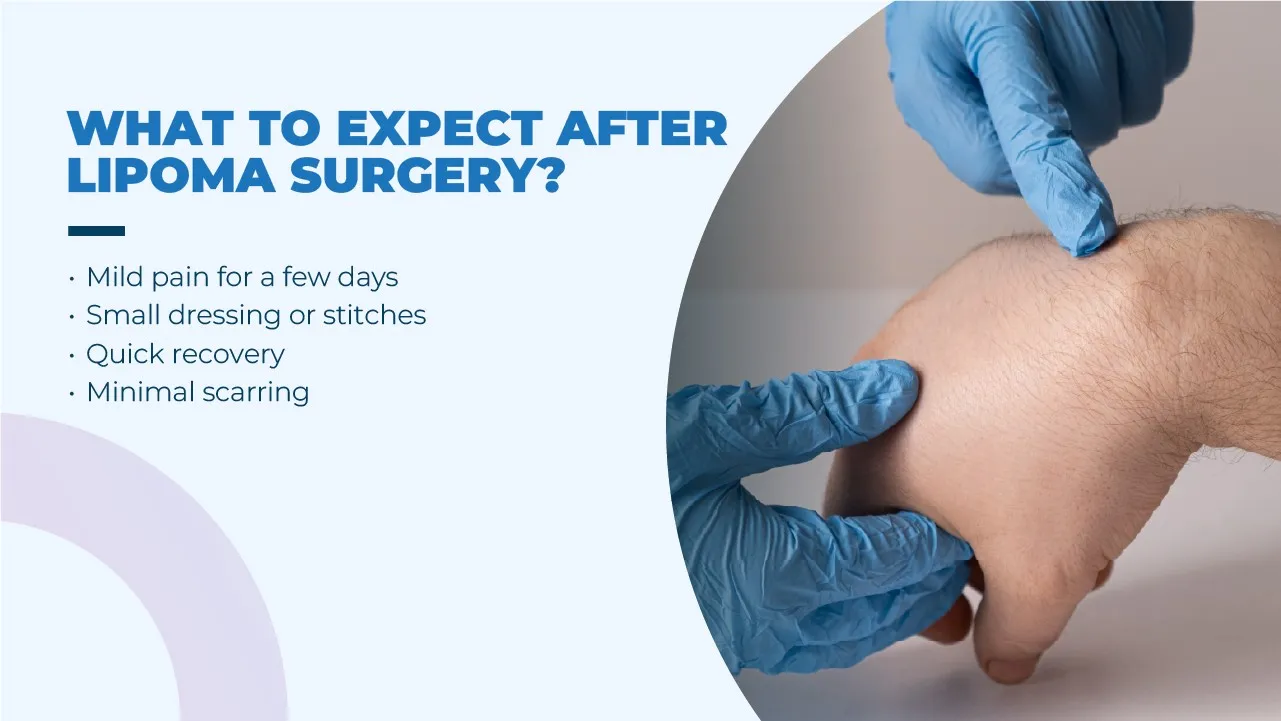
Lipomas are round or oval-shaped small lumps or nodules found anywhere in your body. Primarily, these are seen in the forehead, neck, arms, back, thighs, buttocks, and legs. These slow-growing nodules are painless and often develop between your skin and the muscle layer in the form of fatty tissues or blood vessels.
In most cases, lipomas do not require any treatment because they are benign (non-cancerous) lumps that are not life-threatening or dangerous. However, you can go for lipoma surgery if they enlarge, are unpleasant to look at, get infected, or cause pain. Let’s understand more about the do’s and don’ts after lipoma surgery, along with other relevant details.
What is Lipoma Surgery?
Lipoma surgery or surgical excision (removal) of lipoma is a commonly used treatment for removing these nodules or lumps from your body. You get good post-op results and minimal complications if you opt for this treatment. The risk of recurrence is also reduced significantly with surgical excision.
This outpatient procedure is performed under local anaesthesia. This involves making small incisions (cuts) of 3 to 4 mm in certain sections of your body. A surgical instrument is inserted into the cuts to extract the lipoma from the surrounding tissues. Later, the wound is sutured and covered with a waterproof dressing to ensure healing.
What To Expect During Lipoma Surgery?
Enlarged, painful lipomas are removed through surgical excision under local anaesthesia. This outpatient procedure does not require hospitalisation, and the recovery usually takes 2-3 weeks.
The lipoma surgery recovery time depends on:
- Your age
- The size and location of the lipoma
- The content of the lipoma
- The surgical technique used for the removal
- The presence of any other diseases, like diabetes (high blood sugar levels)
- Using certain medications that may affect the recovery process, such as blood thinners or antihistamines
What to Expect Immediately After Lipoma Surgery?
You might experience some pain, swelling or even tenderness at the surgical site. You may also experience a temporary loss of sensation near the incision, which is normal. It will take you some time to recover after undergoing lipoma surgery. So, immediately after the surgery, you can expect the following:
- Mild pain or discomfort once your local anaesthesia wears off.
- Waterproof dressing over the surgical site. You will also get post-op and wound care instructions from the surgeon.
- You will remain under observation for at least an hour before being discharged.
- You will not be in a condition to drive alone for at least 7-10 days, so ask someone to drive you home.
- Your surgeon will also prescribe pain relief medications to manage any postoperative pain and discomfort in the future.
- Rest on the day of your surgery to help your body heal.
Post Lipoma Surgery Care Plan
Taking care of yourself after the removal of a lipoma is equally important as the day of your surgery. Here are some tips and tricks to follow as part of your lipoma removal aftercare:
- Taking long naps for healing and faster recovery.
- Avoid washing your face for around 2 weeks after surgery to prevent wound infection, especially if you were operated on your forehead.
- You may feel mild discomfort or pain after lipoma surgery for a few days. Take the medications prescribed by your surgeon to get relief.
- Avoid having a bath for at least 1 week to avoid any kind of wound infection. Alternatively, you can take a sponge bath instead.
Also Read: What is Postnasal Drip?
Lipoma Surgery Aftercare with Safe Practices During Recovery
Healing often takes time, and it's important that you take the right precautions to ensure your wound isn’t infected or needs additional medications. Here are some common do’s and don’ts to keep in mind:
- 1 Week After Surgery
- You are likely to be called for suture removal 7-10 days after surgery and to get your wound checked for any signs of infection. However, you may still get a pressure dressing on the area for at least 2 weeks to minimise the risk of bruising.
- Wound care is the key to faster healing and requires you to change your waterproof pressure dressing every 2-3 days post-surgery.
- You can easily have a bath a week after your surgery. However, avoid soaking yourself in hot tubs for at least 4 weeks. Dry your wound immediately to reduce the risk of any infection.
- You can resume your mild routine activities during the first week.
- Avoid strenuous activities or exercises for at least 2 weeks to prevent wound separation.
- 2 Weeks After Surgery
- Once your wound is healed, you may be left with a scar at the surgical site. Make sure to massage it daily with a moisturiser to prevent dryness.
- Apply ice packs on your incision for 15-20 minutes regularly to reduce further bruising and swelling.
- 1 Month After Surgery
- You are likely to recover within 2-3 weeks after complete wound healing.
- You can easily resume moderate exercises and begin vigorous activities and the gym.
- You can also resume swimming after 4 weeks after your surgery.
Do’s and Don’ts After Lipoma Surgery
Recovery after lipoma surgery is usually smooth, but proper aftercare plays an important role in preventing infection, reducing scarring, and supporting faster healing. Doctors generally share a few simple practices to follow and certain activities to avoid during recovery. The table below outlines common do’s and don’ts patients are advised to keep in mind after lipoma removal, based on typical healing timelines.
| Do’s (Recommended Care) | Don’ts (What to Avoid) |
|---|---|
| Keep the surgical wound clean and dry | Do not perform strenuous activities or heavy exercise for at least two weeks |
| Change the waterproof pressure dressing every two to three days, as advised | Avoid stretching or pulling the surgical area |
| Attend follow-up visits for suture removal and wound assessment | Do not soak in hot tubs, pools, or baths for four weeks |
| Resume light daily activities during the first week | Avoid applying creams or oils to an unhealed wound |
| Gently dry the wound after bathing to reduce infection risk | Do not scratch, rub, or disturb the incision site |
| Massage the scar with a moisturiser once the wound has healed | Avoid resuming gym workouts suddenly without approval |
| Use ice packs for fifteen to twenty minutes to reduce swelling or bruising | Do not ignore redness, discharge, increasing pain, or swelling |
| Gradually return to exercise after medical clearance |
When to Contact Your Surgeon?
Lipoma surgery aftercare is very important to ensure you do not face further medical complications. However, you should contact your surgeon immediately if:
- Blood soaks through your wound dressing.
- Your sutures tear apart.
- You experience fever and chills.
- The wound is infected with signs like swelling, redness, and drainage of pus.
- Your skin is bumpy, itchy, or you have a rash.
- You experience nausea and vomiting.
Get the Best Lipoma Surgery at Apollo Spectra
Lipomas are non-cancerous lumps that are harmless unless you experience severe pain and discomfort. Surgical excision is the best option for lipoma removal because of the reduced risk of recurrence and postoperative complications. However, you must have complete information about your surgical procedure, including the healing process after lipoma removal, to get fruitful results.
If you are considering surgery soon, reach out to Apollo Spectra. Our team of well-trained and qualified surgeons can easily help make your surgical journey safe and smooth!
Recent Blogs


Get Expert Health Advice
Related Blogs

NOTICE BOARD
CONTACT US
FOR PARTNERSHIP
CONTACT US
FOR PARTNERSHIP
.svg)
.svg)
.svg)
.svg)


 Book Appointment


Need Help?
Request a Callback
Have questions about your treatment or consultation? Our experts are here to help.